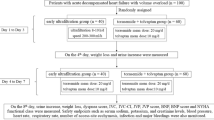
A sobrecarga de fluidos é comum em pacientes críticos após ressuscitação e está associada a desfechos desfavoráveis. A ultrafiltração durante a terapia de substituição renal é uma estratégia para reverter essa condição, mas o momento, a dose e os limites de segurança ideais não estão claros. A intolerância à ultrafiltração é multifatorial e deve ser abordada como um construto multidimensional, con
Decisão & Regulação📄 Resumo de estudo🏥 UTI / Emergência
§ 01
Visão geral
§ 02
Abstract
Fluid overload is common after resuscitation in critically ill patients and is independently associated with unfavorable outcomes. Ultrafiltration (UF) during renal replacement therapy is a common strategy to reverse this condition. Nevertheless, the optimal timing, dose, and safety limits remain unclear. Observational studies suggest a U-shaped relationship between net UF rate and mortality, highlighting a narrow therapeutic window. Insufficient UF prolongs exposure to congestion, whereas excessive UF may precipitate hemodynamic instability and tissue hypoperfusion. This phenomenon, often labeled “UF intolerance”, lacks a standardized definition and is frequently attributed to intravascular volume depletion alone, overlooking broader cardiovascular and autonomic mechanisms.
This perspective synthesizes the physiological effects and cardiovascular response to ultrafiltration and reframes “ultrafiltration intolerance” as a multidimensional construct determined by four compensatory axes: vascular refilling, cardiac response, venoconstriction/venous capacitance, and systemic arteriolar resistance. We delineate how renal replacement therapy-related factors interact with underlying critical illness to impair these axes and precipitate tissue hypoperfusion. Building on this framework, we (i) argue for proactive, individualized ultrafiltration prescriptions; (ii) propose dynamic predictors that emulate fluid removal to reveal physiologic reserve (iii) outline pragmatic, bedside endotypes of ultrafiltration intolerance: preload dependence, cardiac dysfunction, decreased vascular tone, autonomic dysfunction, and impaired vascular refilling. We propose a holistic framework that emphasizes prevention over rescue and guides tailored ultrafiltration prescription based on endotypes.
Ultrafiltration intolerance in critically ill patients is multifactorial and not solely a problem of volume depletion. A physiology-based, preventive, and personalized ultrafiltration strategy (anchored in dynamic testing, ultrasound-based congestion profiling, and perfusion monitoring) may improve hemodynamic tolerance, decongestion efficacy, and patient-centered outcomes. Prospective studies should validate these concepts to establish evidence-based protocols for personalized ultrafiltration in critical care.
Fig. Figura
Fig. Figura
Fig. Figura
FO:AKI:UF:RRT:UFNET :IDH:HIRRT:CRRT:CO:HR:LV:SVR:SLED:LUS:VExUS:CRT:PLR:POCUS:IVC:VTI:NT-proBNP: N-terminal pro B-type natriuretic peptide E:E’:DAP:PI:PVPI:
Balakumar V, Murugan R, Sileanu FE, Palevsky P, Clermont G, Kellum JA. Both positive and negative fluid balance may be associated with reduced long-term survival in the critically ill. Crit Care Med. 2017;45(8):e749–57.
Garzotto F, Ostermann M, Martín-Langerwerf D, Sánchez-Sánchez M, Teng J, Robert R, et al. The dose response multicentre investigation on fluid assessment (DoReMIFA) in critically ill patients. Crit Care. 2016;20(1):196.
Payen D, de Pont AC, Sakr Y, Spies C, Reinhart K, Vincent JL. A positive fluid balance is associated with a worse outcome in patients with acute renal failure. Crit Care. 2008;12(3):R74.
Salahuddin N, Sammani M, Hamdan A, Joseph M, Al-Nemary Y, Alquaiz R, et al. Fluid overload is an independent risk factor for acute kidney injury in critically ill patients: results of a cohort study. BMC Nephrol. 2017;18(1):45.
Heung M, Wolfgram DF, Kommareddi M, Hu Y, Song PX, Ojo AO. Fluid overload at initiation of renal replacement therapy is associated with lack of renal recovery in patients with acute kidney injury. Nephrol Dial Transplant. 2012;27(3):956–61.
Koc V, Delmas Benito L, de With E, Boerma EC. The effect of fluid overload on attributable morbidity after cardiac surgery: a retrospective study. Crit Care Res Pract. 2020;2020:1–7.
Vaara ST, Korhonen AM, Kaukonen KM, Nisula S, Inkinen O, Hoppu S, et al. Fluid overload is associated with an increased risk for 90-day mortality in critically ill patients with renal replacement therapy: data from the prospective FINNAKI study. Crit Care. 2012;16(5):R197.
Mitchell KH, Carlbom D, Caldwell E, Leary PJ, Himmelfarb J, Hough CL. Volume overload: prevalence, risk factors, and functional outcome in survivors of septic shock. Ann Am Thorac Soc. 2015;12(12):1837–44.
Woodward CW, Lambert J, Ortiz-Soriano V, Li Y, Ruiz-Conejo M, Bissell BD, et al. Fluid overload associates with major adverse kidney events in critically ill patients with acute kidney injury requiring continuous renal replacement therapy. Crit Care Med. 2019;47(9):e753–60.
Reis T, Ronco C, Soranno DE, Clark W, de Rosa S, Forni LG, et al. Standardization of nomenclature for the mechanisms and materials utilized for extracorporeal blood purification. Blood Purif. 2024;53(5):329–42.
RENAL Replacement Therapy Study Investigators, Bellomo R, Cass A, Cole L, Finfer S, Gallagher M, et al. An observational study fluid balance and patient outcomes in the Randomized Evaluation of Normal vs. Augmented Level of Replacement Therapy trial. Crit Care Med. 2012;40(6):1753–60.
Bouchard J, Soroko SB, Chertow GM, Himmelfarb J, Ikizler TA, Paganini EP, et al. Fluid accumulation, survival and recovery of kidney function in critically ill patients with acute kidney injury. Kidney Int. 2009;76(4):422–7.
VANISH Acute Renal Failure Trial Network, Palevsky PM, Zhang JH, O’Connor TZ, Chertow GM, Crowley ST, et al. Intensity of renal support in critically ill patients with acute kidney injury. NEJM. 2008;359(1):7–20.
Murugan R, Balakumar V, Kerti SJ, Priyanka P, Chang CCH, Clermont G, et al. Net ultrafiltration intensity and mortality in critically ill patients with fluid overload. Crit Care. 2018;22(1):223.
Neri M, Villa G, Garzotto F, Bagshaw S, Bellomo R, Cerda J, et al. Nomenclature for renal replacement therapy in acute kidney injury: basic principles. Crit Care. 2016;20(1):318.
Murugan R, Kerti SJ, Chang CCH, Gallagher M, Clermont G, Palevsky PM, et al. Association of net ultrafiltration rate with mortality among critically ill adults with acute kidney injury receiving continuous venovenous hemodiafiltration. JAMA Netw Open. 2019;2(6):e195418.
Neyra JA, Lambert J, Ortiz-Soriano V, Cleland D, Colquitt J, Adams P, et al. Assessment of prescribed vs. achieved fluid balance during continuous renal replacement therapy and mortality outcome. PLoS One. 2022;17(8):e0272913.
Akhoundi A, Singh B, Vela M, Chaudhary S, Monaghan M, Wilson GA, et al. Incidence of adverse events during continuous renal replacement therapy. Blood Purif. 2015;39(4):333–9.
Shawwa K, Kompotiatis P, Jentzer JC, Wiley BM, Williams AW, Dillon JJ, et al. Hypotension within one-hour from starting CRRT is associated with in-hospital mortality. J Crit Care. 2019;54:7–13.
Uchino S, Bellomo R, Morimatsu H, Morgera S, Schetz M, Tan I, et al. Continuous renal replacement therapy: a worldwide practice survey. Intensive Care Med. 2007;33(9):1563–70.
Vinsonneau C, Camus C, Combes A, de Costa Beauregard MA, Klouche K, Boulain T, et al. Continuous venovenous haemodiafiltration versus intermittent haemodialysis for acute renal failure in patients with multiple-organ dysfunction syndrome: a multicentre randomised trial. Lancet. 2006;368(9533):379–85.
Ballarin Albino B, Balbi AL, Ponce D. Dialysis complications in AKI patients treated with extended daily dialysis: is the duration of therapy important? BioMed Res Int. 2014;2014:1–9.
Daugirdas JT. Intradialytic hypotension and splanchnic shifting: integrating an overlooked mechanism with the detection of ischemia-related signals during hemodialysis. Semin Dial. 2019;32(3):243–7.
Chazot G, Bitker L, Mezidi M, Chebib N, Chabert P, Chauvelot L, et al. Prevalence and risk factors of hemodynamic instability associated with preload-dependence during continuous renal replacement therapy in a prospective observational cohort of critically ill patients. Ann Intensive Care. 2021;11(1):95.
Bergamaschi V, Vignazia GL, Messina A, Colombo D, Cammarota G, Corte F, et al. Transthoracic echocardiographic assessment of cardiac output in mechanically ventilated critically ill patients by intensive care unit physicians. Brazilian Journal of Anesthesiology (English Edition). 2019;69(1):20–6.
Mongkolpun W, Bakos P, Vincent JL, Creteur J. Monitoring skin blood flow to rapidly identify alterations in tissue perfusion during fluid removal using continuous veno-venous hemofiltration in patients with circulatory shock. Ann Intensive Care. 2021;11(1):59.
Bitker L, Bayle F, Yonis H, Gobert F, Leray V, Taponnier R, et al. Prevalence and risk factors of hypotension associated with preload-dependence during intermittent hemodialysis in critically ill patients. Crit Care. 2016;20(1):44.
Biscarrat C, Deniel G, Chivot M, Yonis H, Chauvelot L, Mezidi M, et al. Diagnostic performance of a 250-ml net ultrafiltration challenge to identify risk of preload-dependence in critically ill patients undergoing continuous renal replacement therapy: a randomized, cross-over trial. Crit Care. 2025;29(1):446.
Beaubien-Souligny W, Rhéaume M, Blondin MC, El-Barnachawy S, Fortier A, Éthier J, et al. A simplified approach to extravascular lung water assessment using point-of-care ultrasound in patients with end-stage chronic renal failure undergoing hemodialysis. Blood Purif. 2018;45(1–3):79–87.
Wang L, Qiu C, Guan X, Chen M, Chen J, Si X, et al. Fluid removal with ultrasound guided protocol improves the efficacy and safety of dehydration in post-resuscitated critically ill patients: a quasi-experimental, before and after study. Shock. 2018;50(4):401–7.
Beaubien-Souligny W, Rola P, Haycock K, Bouchard J, Lamarche Y, Spiegel R, et al. Quantifying systemic congestion with point-of-care ultrasound: development of the venous excess ultrasound grading system. Ultrasound J. 2020;12(1):16.
McIntyre CW, Burton JO, Selby NM, Leccisotti L, Korsheed S, Baker CSR, et al. Hemodialysis-induced cardiac dysfunction is associated with an acute reduction in global and segmental myocardial blood flow. Clin J Am Soc Nephrol. 2008;3(1):19–26.
Chou YH, Chen YF, Pan SY, Huang TM, Yang FJ, Shen WC, et al. The role of brain natriuretic peptide in predicting renal outcome and fluid management in critically ill patients. J Formos Med Assoc. 2015;114(12):1187–96.
Vignon P, Allot V, Lesage J, Martaillé JF, Aldigier JC, François B, et al. Diagnosis of left ventricular diastolic dysfunction in the setting of acute changes in loading conditions. Crit Care. 2007;11(2):R43.
Kelly YP, Sharma S, Mothi SS, McCausland FR, Mendu ML, McMahon GM, et al. Hypocalcemia is associated with hypotension during CRRT: a secondary analysis of the acute renal failure trial network study. J Crit Care. 2021;65:261–7.
der Sande Kooman FMJP, Konings CJ, Leunissen KML. Thermal effects and blood pressure response during postdilution hemodiafiltration and hemodialysis. J Am Soc Nephrol. 2001;12(9):1916–20.
Maggiore Q, Pizzarelli F, Santoro A, Panzetta G, Bonforte G, Hannedouche T, et al. The effects of control of thermal balance on vascular stability in hemodialysis patients: results of the European randomized clinical trial. Am J Kidney Dis. 2002;40(2):280–90.
Edrees FY, Katari S, Baty JD, Vijayan A. A pilot study evaluating the effect of cooler dialysate temperature on hemodynamic stability during prolonged intermittent renal replacement therapy in acute kidney injury. Crit Care Med. 2019;47(2):e74-80.
Rokyta R, Matejovic M, Krouzecky A, Opatrny K, Ruzicka J, Novak I. Effects of continuous venovenous haemofiltration-induced cooling on global haemodynamics, splanchnic oxygen and energy balance in critically ill patients. Nephrol Dial Transplant. 2004;19(3):623–30.
Robert R, Méhaud JE, Timricht N, Goudet V, Mimoz O, Debaene B. Benefits of an early cooling phase in continuous renal replacement therapy for ICU patients. Ann Intensive Care. 2012;2(1):40.
Hamzaoui O, Teboul JL. Importance of diastolic arterial pressure in septic shock: PRO. J Crit Care. 2019;51:238–40.
Evans L, Rhodes A, Alhazzani W, Antonelli M, Coopersmith CM, French C, et al. Surviving sepsis campaign: international guidelines for management of sepsis and septic shock 2021. Intensive Care Med. 2021;47(11):1181–247.
Toner A, Whittle J, Ackland GL. Autonomic dysfunction is the motor of chronic critical illness. In: Annual update in intensive care and emergency medicine 2013. Berlin, Heidelberg: Springer Berlin Heidelberg; 2013. p. 199–209.
Hilz MJ, Liu M, Roy S, Wang R. Autonomic dysfunction in the neurological intensive care unit. Clin Auton Res. 2019;29(3):301–11.
Schmidt H, Hoyer D, Wilhelm J, Söffker G, Heinroth K, Hottenrott K, et al. The alteration of autonomic function in multiple organ dysfunction syndrome. Crit Care Clin. 2008;24(1):149–63.
Mazzeo AT, la Monaca E, di Leo R, Vita G, Santamaria LB. Heart rate variability: a diagnostic and prognostic tool in anesthesia and intensive care. Acta Anaesthesiol Scand. 2011;55(7):797–811.
de Castilho FM, Ribeiro ALP, Nobre V, Barros G, de Sousa MR. Heart rate variability as predictor of mortality in sepsis: a systematic review. PLoS One. 2018;13(9):e0203487.
Schmidt H, Müller-Werdan U, Hoffmann T, Francis DP, Piepoli MF, Rauchhaus M, et al. Autonomic dysfunction predicts mortality in patients with multiple organ dysfunction syndrome of different age groups. Crit Care Med. 2005;33(9):1994–2002.
Park S, Kim WJ, Cho NJ, Choi CY, Heo NH, Gil HW, et al. Predicting intradialytic hypotension using heart rate variability. Sci Rep. 2019;9(1):2574.
Pinto Lima A, Beelen P, Bakker J. Use of a peripheral perfusion index derived from the pulse oximetry signal as a noninvasive indicator of perfusion. Crit Care Med. 2002;30(6):1210–3.
Tapar H, Karaman S, Dogru S, Karaman T, Sahin A, Tapar GG, et al. The effect of patient positions on perfusion index. BMC Anesthesiol. 2018;18(1):111.
Guimarães LB, Guimarães CM, Carraro Junior H, Assreuy Filho J, de Menezes IAC. Peripheral perfusion response to semiorthostatic stress: a simple method for assessing autonomic dysfunction in sepsis? Crit Care Sci. 2024. https://doi.org/10.62675/2965-2774.20240090-en.
Beurton A, Teboul JL, Gavelli F, Gonzalez FA, Girotto V, Galarza L, et al. The effects of passive leg raising may be detected by the plethysmographic oxygen saturation signal in critically ill patients. Crit Care. 2019;23(1):19.
Mostafa H, Shaban M, Hasanin A, Mohamed H, Fathy S, Abdelreheem HM, et al. Evaluation of peripheral perfusion index and heart rate variability as early predictors for intradialytic hypotension in critically ill patients. BMC Anesthesiol. 2019;19(1):242.
de los Reyes VAA, Fuertinger DH, Kappel F, Meyring-Wösten A, Thijssen S, Kotanko P. A physiologically based model of vascular refilling during ultrafiltration in hemodialysis. J Theor Biol. 2016;390:146–55.
Mitsides N, Pietribiasi M, Waniewski J, Brenchley P, Mitra S. Transcapillary refilling rate and its determinants during haemodialysis with standard and high ultrafiltration rates. Am J Nephrol. 2019;50(2):133–43.
Baldwin I, Maeda A, Bellomo R, See E. Haematocrit monitoring and blood volume estimation during continuous renal replacement therapy. Aust Crit Care. 2024;37(4):632–7.
Rabi R, Alsaid RM, Matar AN, Dawabsheh Y, Abu GD. The role of serum albumin in critical illness, predicting poor outcomes, and exploring the therapeutic potential of albumin supplementation. Sci Prog. 2024. https://doi.org/10.1177/00368504241274023.
Atrash AK, de Vasconcellos K. Low albumin levels are associated with mortality in the critically ill: a retrospective observational study in a multidisciplinary intensive care unit. South Afr J Crit Care. 2020;36(2):74–9.
Knoll GA, Grabowski JA, Dervin GF, O’Rourke K. A randomized, controlled trial of albumin versus saline for the treatment of intradialytic hypotension. J Am Soc Nephrol. 2004;15(2):487–92.
van der Sande FM, Kooman JP, Barendregt JNM, Nieman FHM, Leunissen KML. Effect of intravenous saline, albumin, or hydroxyethylstarch on blood volume during combined ultrafiltration and hemodialysis. J Am Soc Nephrol. 1999;10(6):1303–8.
Clark E, McIntyre L, Watpool I, Kong JWY, Ramsay T, Sabri E, et al. Intravenous albumin for the prevention of hemodynamic instability during sustained low-efficiency dialysis. A randomized controlled feasibility trial. (the SAFER-SLED study). Ann Intensive Care. 2021;11(1):174.
Janeway CA, Gibson ST, Woodruff LM, Heyl JT, Bailey OT, Newhouser LR. Chemical, clinical, and immunological studies on the products of human plasma fractionation. vii. concentrated human serum albumin 123. J Clin Invest. 1944;23(4):465–90.
Frenette AJ, Bouchard J, Bernier P, Charbonneau A, Nguyen LT, Rioux JP, et al. Albumin administration is associated with acute kidney injury in cardiac surgery: a propensity score analysis. Crit Care. 2014;18(6):602.
Lee EH, Kim WJ, Kim JY, Chin JH, Choi DK, Sim JY, et al. Effect of exogenous albumin on the incidence of postoperative acute kidney injury in patients undergoing off-pump coronary artery bypass surgery with a preoperative albumin level of less than 4.0 g/dl. Anesthesiology. 2016;124(5):1001–11.
Rochwerg B, Alhazzani W, Gibson A, Ribic CM, Sindi A, Heels-Ansdell D, et al. Fluid type and the use of renal replacement therapy in sepsis: a systematic review and network meta-analysis. Intensive Care Med. 2015;41(9):1561–71.
Shehabi Y, Balachandran M, Al-Bassam W, Bailey M, Bellomo R, Bihari S, et al. Postoperative 20% albumin infusion and acute kidney injury in high-risk cardiac surgery patients. JAMA Surg. 2025;160(8):835.
Callum J, Skubas NJ, Bathla A, Keshavarz H, Clark EG, Rochwerg B, et al. Use of intravenous albumin. Chest. 2024;166(2):321–38.
Schortgen F, Soubrier N, Delclaux C, Thuong M, Girou E, Brun-Buisson C, et al. Hemodynamic tolerance of intermittent hemodialysis in critically ill patients: usefulness of practice guidelines. Am J Respir Crit Care Med. 2000;162(1):197–202.
Malbrain MLNG, Marik PE, Witters I, Cordemans C, Kirkpatrick AW, Roberts DJ, et al. Fluid overload, de-resuscitation, and outcomes in critically ill or injured patients: a systematic review with suggestions for clinical practice. Anestezjol Intens Ter. 2014;46(5):361–80.
This study has been funded by FONDECYT Grant Nº 1230475 (EK).
Conceptualization and designed the review: PM and EK. Literature search: PM and EK. Writing-Original draft preparation: PM and EK. Writing-Review and editing: All authors. Approved of final manuscript: All authors.
Ethics approval and consent to participate
Not applicable.
Consent of publication
Not applicable.
Competing interests
GRG has received funding for lectures from B. Braun, Vantive, Fresenius Medical Care, and Jafron. AW has received funding for lectures from Mindray, GE and Getinge. MO has received research funding from Biomerieux and Baxter (paid to the institution).
Springer Nature remains neutral with regard to jurisdictional claims in published maps and institutional affiliations.
Open Access This article is licensed under a Creative Commons Attribution-NonCommercial-NoDerivatives 4.0 International License, which permits any non-commercial use, sharing, distribution and reproduction in any medium or format, as long as you give appropriate credit to the original author(s) and the source, provide a link to the Creative Commons licence, and indicate if you modified the licensed material. You do not have permission under this licence to share adapted material derived from this article or parts of it. The images or other third party material in this article are included in the article’s Creative Commons licence, unless indicated otherwise in a credit line to the material. If material is not included in the article’s Creative Commons licence and your intended use is not permitted by statutory regulation or exceeds the permitted use, you will need to obtain permission directly from the copyright holder. To view a copy of this licence, visit http://creativecommons.org/licenses/by-nc-nd/4.0/.