A Pragmatic Trial of Glucocorticoids for Community-Acquired
O uso de glucocorticoides em baixas doses como terapia adjuvante reduziu a mortalidade em pacientes adultos hospitalizados com pneumonia adquirida na comunidade no Quênia. O estudo, que envolveu 2.180 pacientes, mostrou uma mortalidade de 22,6% no grupo que recebeu glucocorticoides, em comparação com 26,0% no grupo de cuidado padrão. A intervenção foi considerada segura, com eventos adversos semel
Visão geral
🎯 Objetivo do Estudo
Avaliar se o uso de glucocorticoides em baixas doses, como terapia adjuvante, reduz a mortalidade em pacientes adultos hospitalizados com pneumonia adquirida na comunidade (PAC) em um ambiente de recursos limitados no Quênia.
👥 População Estudada
🔬 Desenho do Estudo
Estudo pragmático, aberto, randomizado e controlado, conduzido em 18 hospitais públicos de primeiro nível no Quênia entre abril de 2022 e junho de 2024.
💊 Intervenção
Grupo Glucocorticoide (n=1.089): Cuidado padrão + glucocorticoide oral em baixa dose por 10 dias
Grupo Cuidado Padrão (n=1.091): Antibióticos (beta-lactâmicos + macrolídeos) conforme diretrizes da OMS
📈 Resultados Principais
Desfecho Primário - Mortalidade em 30 dias:
Desfechos Secundários - Mortalidade em outros momentos:
⚠️ Segurança
A frequência de eventos adversos e eventos adversos graves foi semelhante entre os dois grupos.
💪 Pontos Fortes do Estudo
⚠️ Pontos Fracos do Estudo
🏥 Aplicabilidade Clínica
✅ Onde Aplicar
💊 Recomendações Práticas
⚕️ Considerações Clínicas Importantes
🌍 Impacto em Saúde Pública
❓ Questões Ainda em Aberto
🎯 Conclusão para Prática Clínica
Este estudo fornece evidências robustas de que glucocorticoides em baixas doses reduzem a mortalidade em pacientes com PAC em ambientes de recursos limitados. A intervenção é simples, segura e de baixo custo, tornando-a altamente aplicável em contextos onde a mortalidade por PAC é elevada e os recursos são escassos. Para hospitais na África Subsaariana e locais similares, a adição de glucocorticoides ao tratamento padrão da PAC deve ser fortemente considerada, respeitando-se as contraindicações individuais.
PneumoniaAuthors: Ruth K. Lucinde, M.Med. https://orcid.org/0000-0001-6926-8556, Henry Gathuri, B.Sc., Paul Mwaniki, Ph.D., Benedict Orindi, Ph.D., Edwin O. Otieno, Stella Mwakio, M.Sc., Lillian Mulemi, B.Sc., +38 , and Anthony O. Etyang, Ph.D.Author Info & AffiliationsPublished October 29, 2025DOI: 10.1056/NEJMoa2507100Copyright © 2025
Abstract
BackgroundAdjunctive glucocorticoids may reduce mortality among patients with severe community-acquired pneumonia (CAP) in well-resourced settings. Whether these drugs are beneficial in low-resource settings with limited diagnostic and treatment facilities is unclear.
MethodsIn this pragmatic, open-label, randomized, controlled trial conducted in 18 public hospitals in Kenya, we assigned adult patients who had received a diagnosis of CAP and who did not have a clear indication for glucocorticoids to receive either standard care for CAP or oral low-dose glucocorticoids for 10 days in addition to standard care. The primary outcome was death from any cause at 30 days after enrollment.Research Summary
A Pragmatic Trial of Glucocorticoids for Community-Acquired Pneumonia
ResultsA total of 2180 patients underwent randomization (1089 assigned to the glucocorticoid group and 1091 to the standard-care group). The median age of the patients was 53 years (interquartile range, 38 to 72); 46% were women. At day 30, deaths were reported in 530 patients (24.3%): 246 patients (22.6%) in the glucocorticoid group and 284 patients (26.0%) in the standard-care group (hazard ratio, 0.84; 95% confidence interval, 0.73 to 0.97; P=0.02). The frequencies of adverse events and serious adverse events were similar in the two trial groups. Serious adverse events that were considered to be related to glucocorticoid administration occurred in 5 patients (0.5%).
ConclusionsIn patients with CAP in a low-resource setting, adjunctive glucocorticoid therapy was associated with a lower risk of death than standard care. (Funded by Wellcome Trust and others; SONIA PACTR number, PACTR202111481740832; ISRCTN number, ISRCTN36138594.)Quick Take
Glucocorticoids for Community-Acquired Pneumonia1m 44sCommunity-acquired pneumonia (CAP) is a leading cause of complications and death worldwide.1 The case-fatality rate from CAP in sub-Saharan Africa is three to five times the rate in high-income settings despite a markedly younger average age of the patients.1,2Glucocorticoids have been proposed as adjunctive therapy for CAP owing to their immunomodulatory effects.3 Data from two recent trials4,5 and systematic reviews of adjunctive hydrocortisone in patients who had been admitted to an intensive care unit (ICU) for CAP6-8 indicate reduced mortality among these patients. However, uncertainty remains because no benefit was shown in other studies.4,9,10 Some3 but not all11 guidelines have been updated to recommend the use of glucocorticoids in selected groups with CAP, but it is unclear what the risks and benefits would be for patients in low-resource settings such as sub-Saharan Africa.First, previous trials involved patients who were considerably older than those in sub-Saharan Africa and excluded patients with coexisting illnesses that are common among patients with CAP in sub-Saharan Africa, such as human immunodeficiency virus (HIV) infection and pulmonary tuberculosis. Second, delayed presentation to a hospital, which is common in sub-Saharan Africa, could compromise the effectiveness of adjunctive glucocorticoids for CAP, because evidence suggests that glucocorticoids should be given early in the course of the disease.4,5 Third, limitations in diagnostic capacity in low-resource settings make it difficult to stratify patients according to the severity of CAP, which appears to influence measures of glucocorticoid efficacy. Finally, most of the evidence showing mortality reduction with use of adjunctive glucocorticoids is derived from studies conducted in ICUs, but studies that were not based in ICUs did not have mortality as a primary end point.12,13 The limited availability of ICUs in sub-Saharan Africa14 constrains the ability to identify and treat severely ill patients and manage any adverse events that may result from glucocorticoid administration.We conducted a pragmatic, randomized, controlled trial — Steroids in Pneumonia (SONIA) — to evaluate the effectiveness and safety of adjunctive low-dose glucocorticoids in adult patients hospitalized with CAP in Kenya.
Methods
Trial Design and PatientsThe trial15 was conducted in 18 first-level referral hospitals that are part of a clinical information network in Kenya (Fig. S1 in the Supplementary Appendix, available with the full text of this article at NEJM.org).16 Access to ICUs was either very limited or nonexistent in these hospitals (Table S4), and patients were recruited from the general medical wards.Eligible patients were adults (≥18 years of age) who had received a diagnosis of CAP and who did not have a clear indication for glucocorticoids to be included as part of their treatment. CAP was defined as the presence of at least two of the following signs and symptoms for less than 14 days: cough, fever, dyspnea, hemoptysis, chest pain, or crackles on chest examination. The patients were enrolled within the first 48 hours after hospital admission. Patients were excluded if they had a contraindication to the receipt of glucocorticoids, were pregnant or breast-feeding, had hospital-acquired pneumonia, or had a known or suspected condition warranting the use of glucocorticoids (e.g., asthma or coronavirus disease 2019 [Covid-19]). The assessment of the cause of CAP through imaging or laboratory tests and the use of standard severity scoring are frequently unavailable at the participating centers and were not a prerequisite for enrollment in the trial.
OversightWe obtained ethical approval from the Kenyan Medical Research Institute Scientific and Ethics Review Unit, the Kenya Pharmacy and Poisons Board, and the Tropical Research Ethics Committee at the University of Oxford. Additional approvals were received from the institutional review boards and hospital administration at all 18 trial sites. Written informed consent was obtained from all the patients or their legally acceptable representative. An independent trial steering committee and data and safety monitoring board provided trial and safety oversight.The data and safety monitoring board, which reviewed the results of an interim analysis that was conducted after approximately half the targeted number of primary events had occurred (with stopping guidelines based on the Haybittle–Peto rules17), recommended continuation of the trial. Details regarding the interim analysis are provided in the Supplementary Appendix.The first and last authors had access to all the trial data and vouch for the accuracy and completeness of the data and for the fidelity of the trial to the protocol (available at NEJM.org). The trial funders had no role in the trial design; in the collection, analysis, or interpretation of the data; or in the writing of the manuscript.
Trial Procedures and Follow-upThe patients in this open-label trial were randomly assigned in a 1:1 ratio to receive either low-dose glucocorticoids plus standard care (glucocorticoid group) or standard care alone (standard-care group). Before the recruitment of patients, an independent trial statistician at a central location sealed randomization cards into opaque envelopes. Sites received batches of these sealed envelopes, which were securely stored and opened sequentially only after confirming the eligibility of patients and their enrollment in the trial.The elements of standard care were determined by the attending physicians and included the administration of a beta-lactam (such as benzylpenicillin or a cephalosporin) and a macrolide (typically, erythromycin or azithromycin), according to the guidelines of the World Health Organization.18The patients in the glucocorticoid group underwent additional randomization to receive a single daily dose of one of five locally available glucocorticoids in bioequivalent doses for a total of 10 days (including after discharge) in addition to standard care. The five dose groups received 6 mg of dexamethasone, 160 mg of hydrocortisone, 30 mg of methylprednisolone, 50 mg of prednisolone, or 50 mg of prednisone (Table S5). The dose and duration of glucocorticoid therapy was informed by the findings in the RECOVERY trial.19 If oral administration of glucocorticoids was not possible at enrollment, intravenous formulations were administered until it was clinically possible to revert to oral formulations (Table S11). Because of the high pill burden imposed by locally available formulations of hydrocortisone and prednisone (Table S5), these formulations were discontinued after the second month of recruitment. There was no tapering of glucocorticoid dose at the end of treatment.20The trial team provided glucocorticoids free of charge but did not influence any other aspects of patient treatment. During hospitalization, the patients received in-person daily follow-up by the trial team. Follow-up after discharge from the hospital was performed through telephone calls made to the patients or their next of kin on days 14 and 30 after enrollment. A local clinical officer (nonphysician clinician21) was employed at each hospital to conduct trial roles, including recruitment and follow-up. This clinician had no role in patient treatment, which was performed by the local hospital medical teams led by a consulting physician.
OutcomesThe primary outcome was death from any cause within 30 days after enrollment. Secondary outcomes included death at days 7, 14, and 21 and death during hospitalization and after discharge up to 30 days after enrollment. Safety outcomes consisted of adverse events and serious adverse events. Data regarding an additional prespecified secondary outcome of immune response were collected during the trial but are not included in this report.
Statistical AnalysisWe estimated that the enrollment of 2180 patients would provide the trial with 85% power to detect a 25% lower mortality in the glucocorticoid group than in the standard-care group at day 30, assuming 20% mortality in the standard-care group and 15% in the glucocorticoid group and allowing for 5% loss to follow-up.1,2,15 The statistical analysis plan was approved by the trial data and safety monitoring board.The primary analysis was a comparison of 30-day mortality in the glucocorticoid and standard-care groups in the intention-to-treat population, which included all the patients who had undergone randomization. We used a Cox regression model that incorporated the trial site as a stratification variable to estimate the hazard ratio for death and its associated 95% confidence interval. The proportional-hazards assumption was assessed by plotting Schoenfeld residuals (Fig. S3) and was confirmed to be valid. We used a stratified log-rank test to compare survival curves for the two trial groups.We performed prespecified subgroup analyses (according to age, sex, glucocorticoid type, trial region, and oxygen saturation at admission) by including interaction terms in the regression models. Secondary outcome analyses included a comparison of mortality at days 7, 14, and 21 both during hospitalization and after discharge according to trial group. Statistical analyses for secondary end points were not adjusted for multiple testing, so the widths of the confidence intervals should not be used to replace hypothesis testing.Safety analyses included patients who had received at least one dose of any trial treatment. Frequencies of adverse events were presented according to severity and relationship to treatment for patients in the glucocorticoid group.After we performed extensive exploration of missing data, we assumed that data were missing at random.22 We conducted two post hoc sensitivity analyses in populations that were defined as follows: a complete-case population (which excluded patients with missing outcome data at 30 days) and a modified intention-to-treat population (which excluded patients who had received glucocorticoids before randomization).
Results
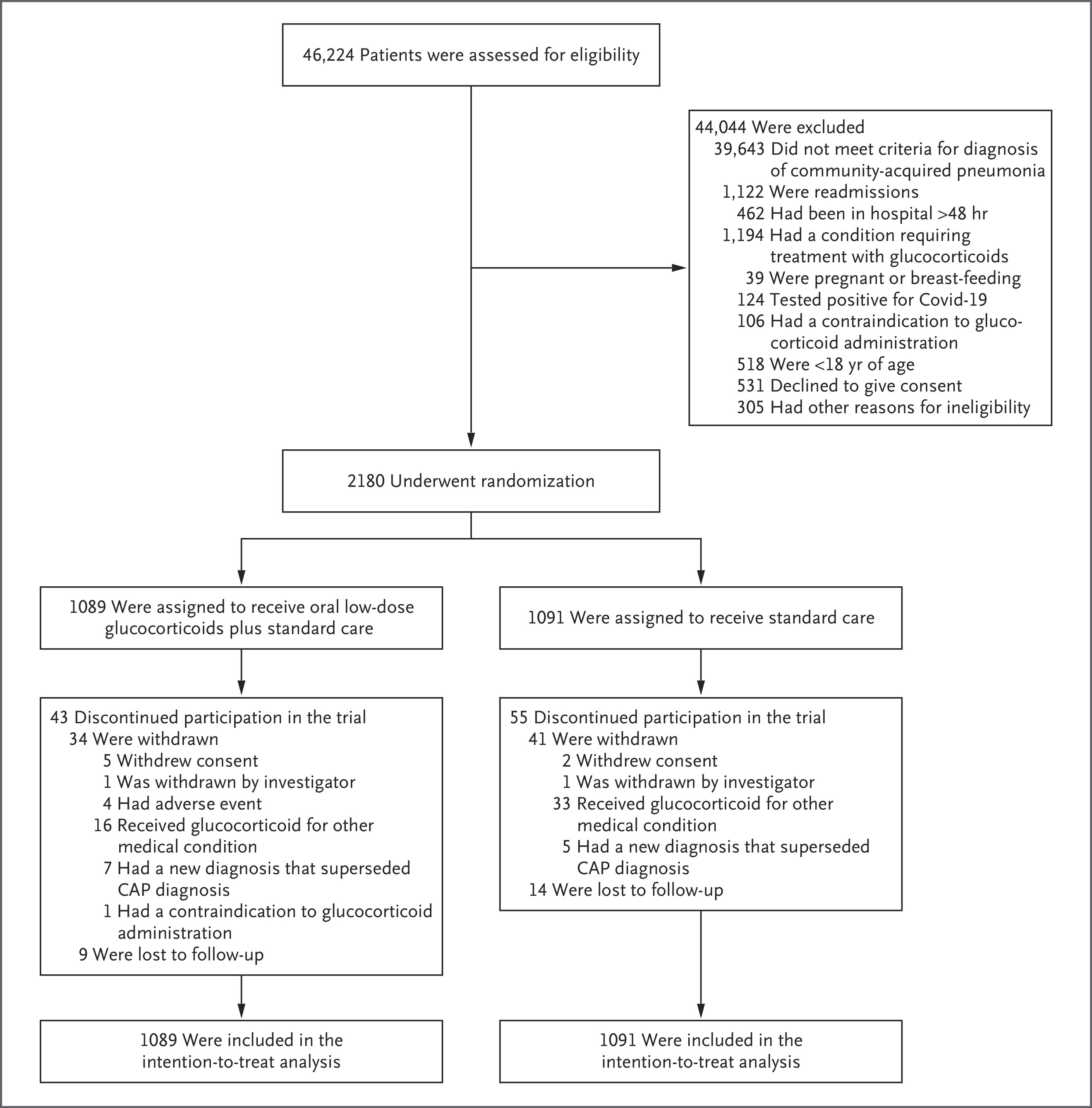
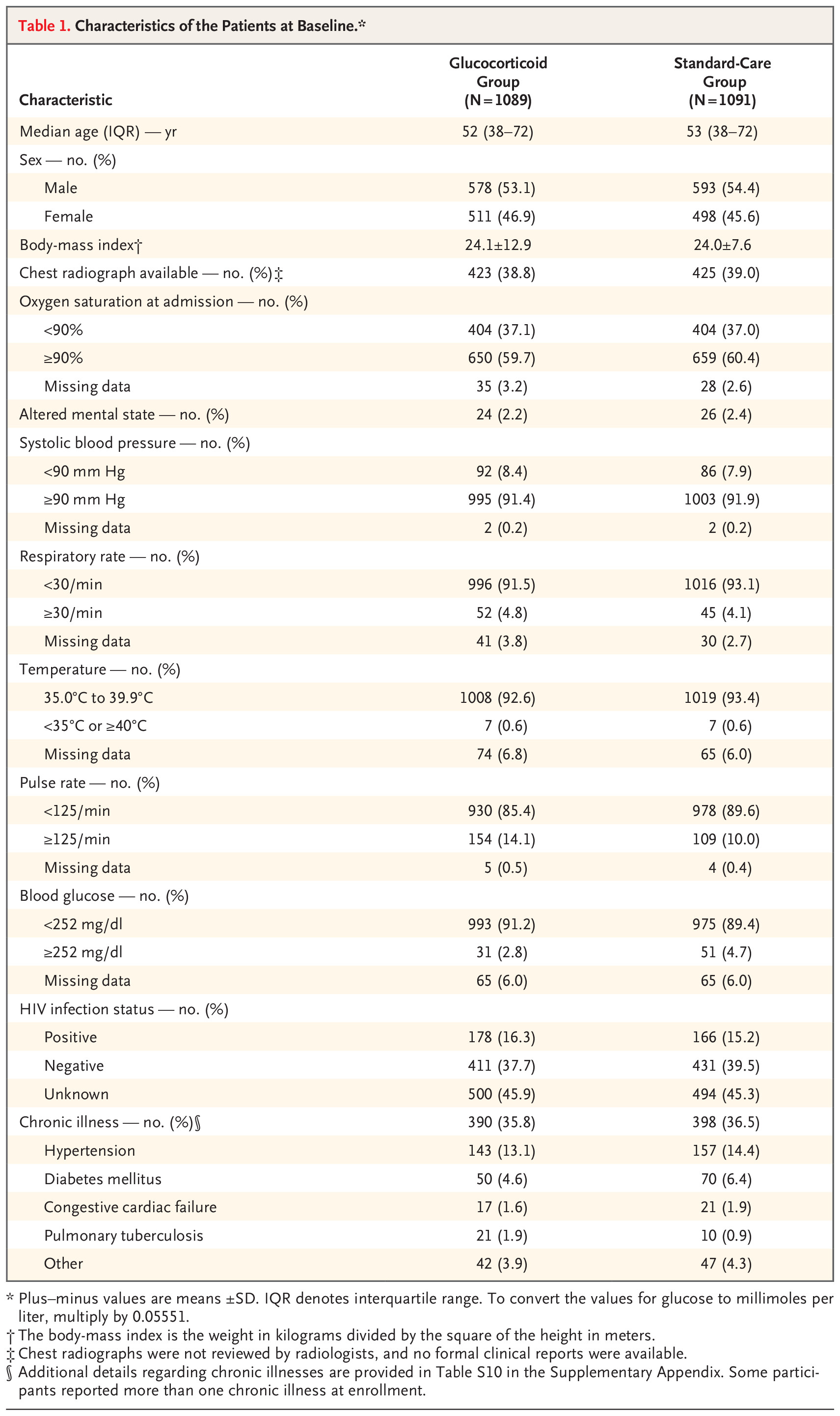
PatientsRecruitment took place from April 26, 2022, to June 30, 2024. A total of 46,224 patients who had been admitted to the adult medical wards of the participating hospitals were screened (Figure 1 and Table S6). Of the 2180 patients who underwent randomization, 1089 were assigned to receive standard care plus glucocorticoids and 1091 to receive standard care alone. Vital status was known for 2107 of these patients (96.7%) at day 14 and for 2082 patients (95.5%) at day 30. Of the 98 patients (4.5%) with missing day 30 data, 75 patients (3.4%) had been withdrawn from the trial and 23 patients (1.1%) had been lost to follow-up (Figure 1).Figure 1***Enrollment and Outcomes.The median age at enrollment was 53 years (interquartile range, 38 to 72); 1009 patients (46.3%) were women, and 808 (37.1%) had low oxygen saturation (<90%) at admission. The characteristics of the patients at enrollment (Table 1), antibiotics received (Table S7), and adherence to prescribed medications (Table S12) were similar in the two trial groups. The patients were considered to be representative of the general adult population with CAP at the trial sites (Table S9). The most common coexisting illnesses at admission were HIV infection in 344 patients (15.8%) and hypertension in 300 patients (13.8%) (Table 1 and Table S10). Of the 1089 patients who were assigned to receive glucocorticoids, 352 (32.3%) were assigned to receive methylprednisolone, 343 (31.5%) to receive prednisolone, 371 (34.1%) to receive dexamethasone, and 23 (2.1%) to receive either hydrocortisone or prednisone (Table S11). The median duration of glucocorticoid treatment during the in-hospital period was 4 days (interquartile range, 2 to 8) (Table S7). Overall, 5 patients (0.2%) were transferred to an ICU during their hospital stay.Table 1Characteristics of the Patients at Baseline.***
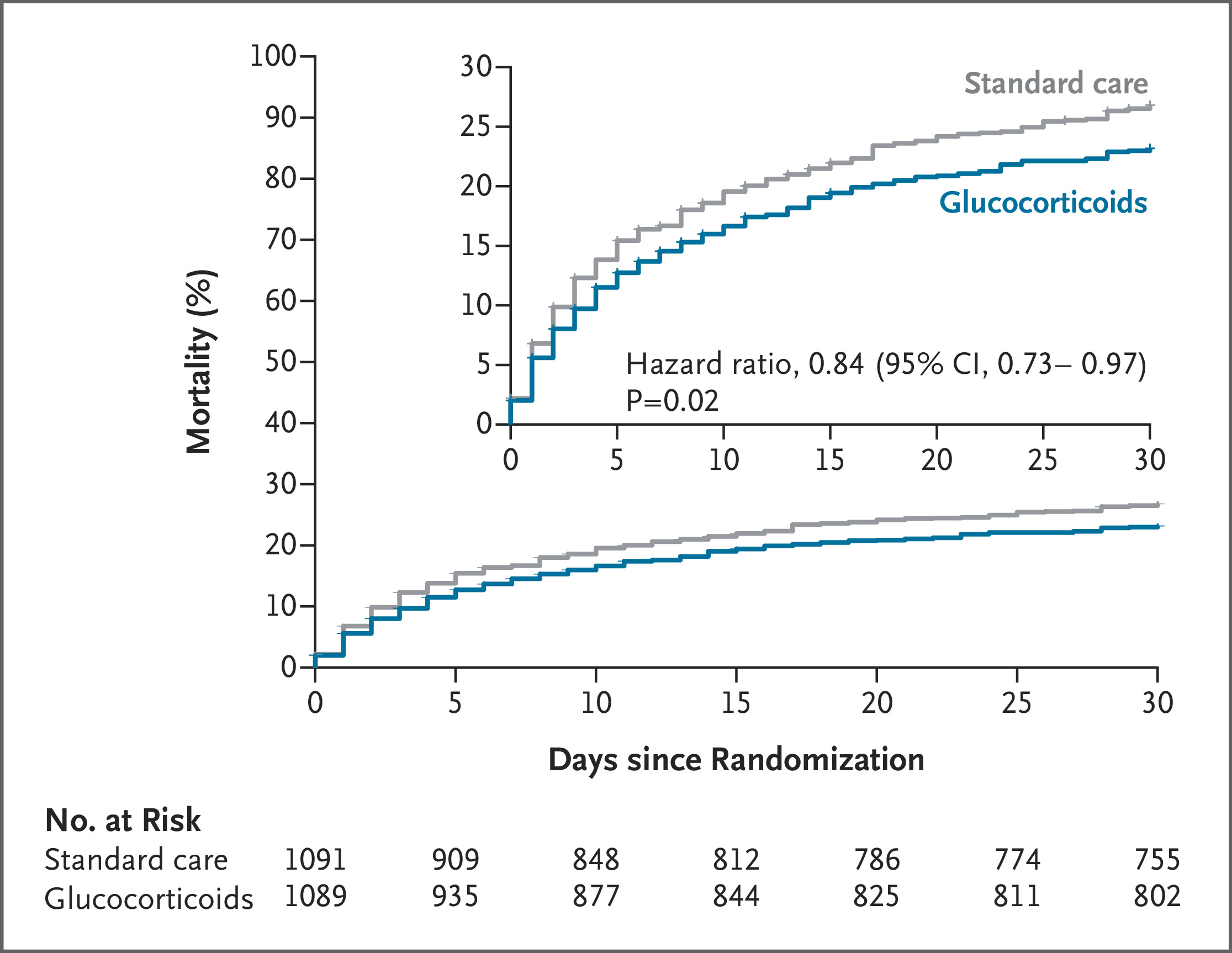
Primary OutcomeOf the 2180 patients who were included in the intention-to-treat analyses, death was reported in 530 patients (24.3%; 95% confidence interval [CI], 22.5 to 26.1) within the 30-day follow-up period. Of these deaths, 246 of 1089 (22.6%; 95% CI, 20.2 to 25.2) occurred in the glucocorticoid group and 284 of 1091 (26.0%; 95% CI, 23.5 to 28.7) in the standard-care group. The patients who were receiving glucocorticoids had a lower 30-day mortality than those who were receiving standard care alone (hazard ratio for death, 0.84; 95% CI, 0.73 to 0.97; P=0.02) (Figure 2).Figure 2Cumulative Risk of Death from Any Cause.
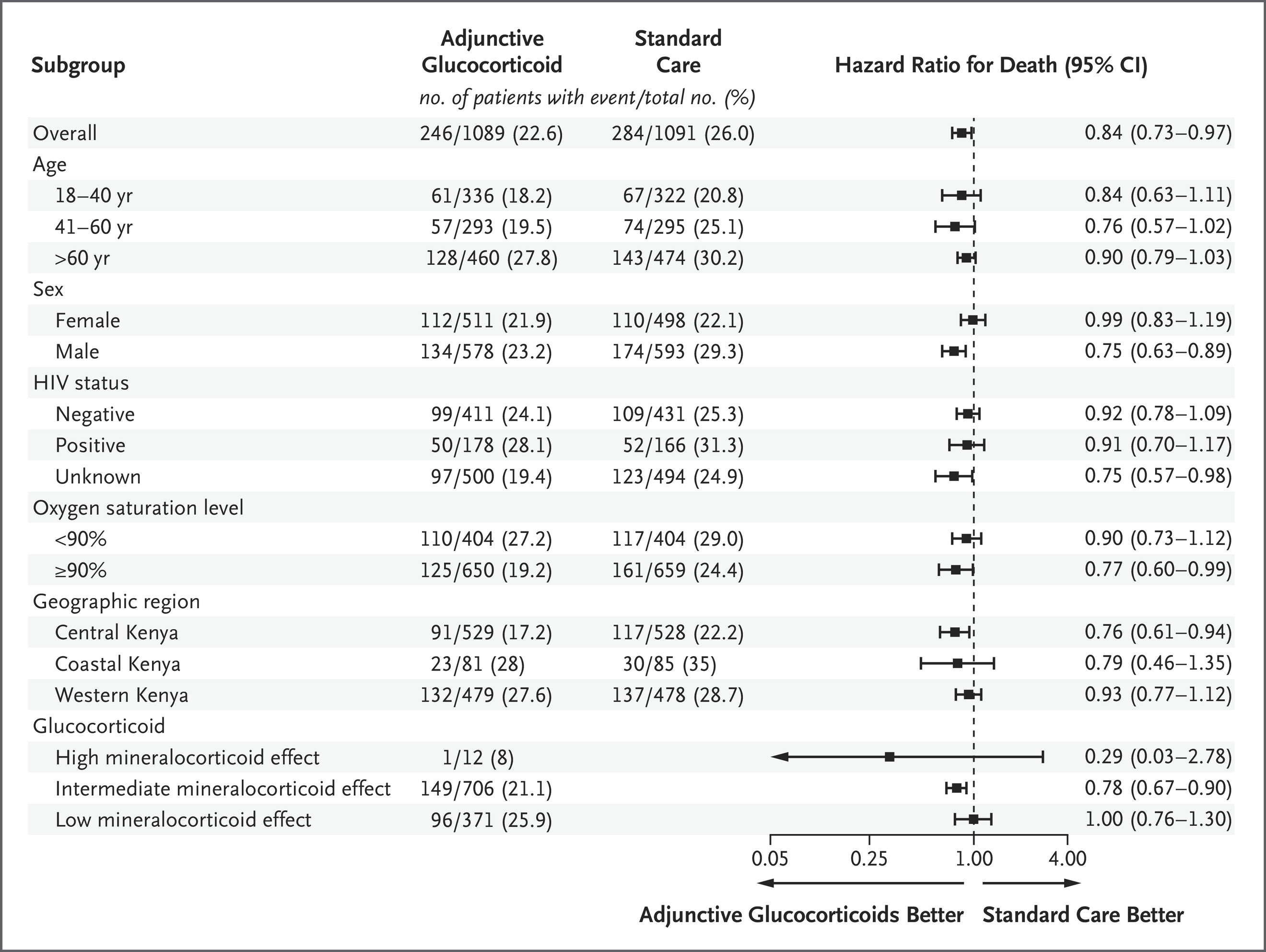
Secondary OutcomesThe risk of death at 7 days, 14 days, and 21 days after enrollment was consistent with the results for the primary outcome (Table S13). In the glucocorticoid group, deaths were reported in 196 of 1089 patients (18.0%) during hospitalization and in 50 of 1089 patients (4.6%) outside the hospital; in the standard-care group, deaths occurred in 223 of 1091 patients (20.4%) and in 61 of 1091 patients (5.6%), respectively (Table S14). Deaths that were stratified according to prespecified subgroups are presented in Figure 3.Figure 3***Primary Outcome, According to Subgroup.*In a post hoc sensitivity analysis, the hazard ratio for death in the complete-case analysis involving 2082 patients was 0.84 (95% CI, 0.73 to 0.96) and the hazard ratio in the modified intention-to-treat analysis involving 2142 patients was 0.83 (95% CI, 0.72 to 0.97) (Table S15).**
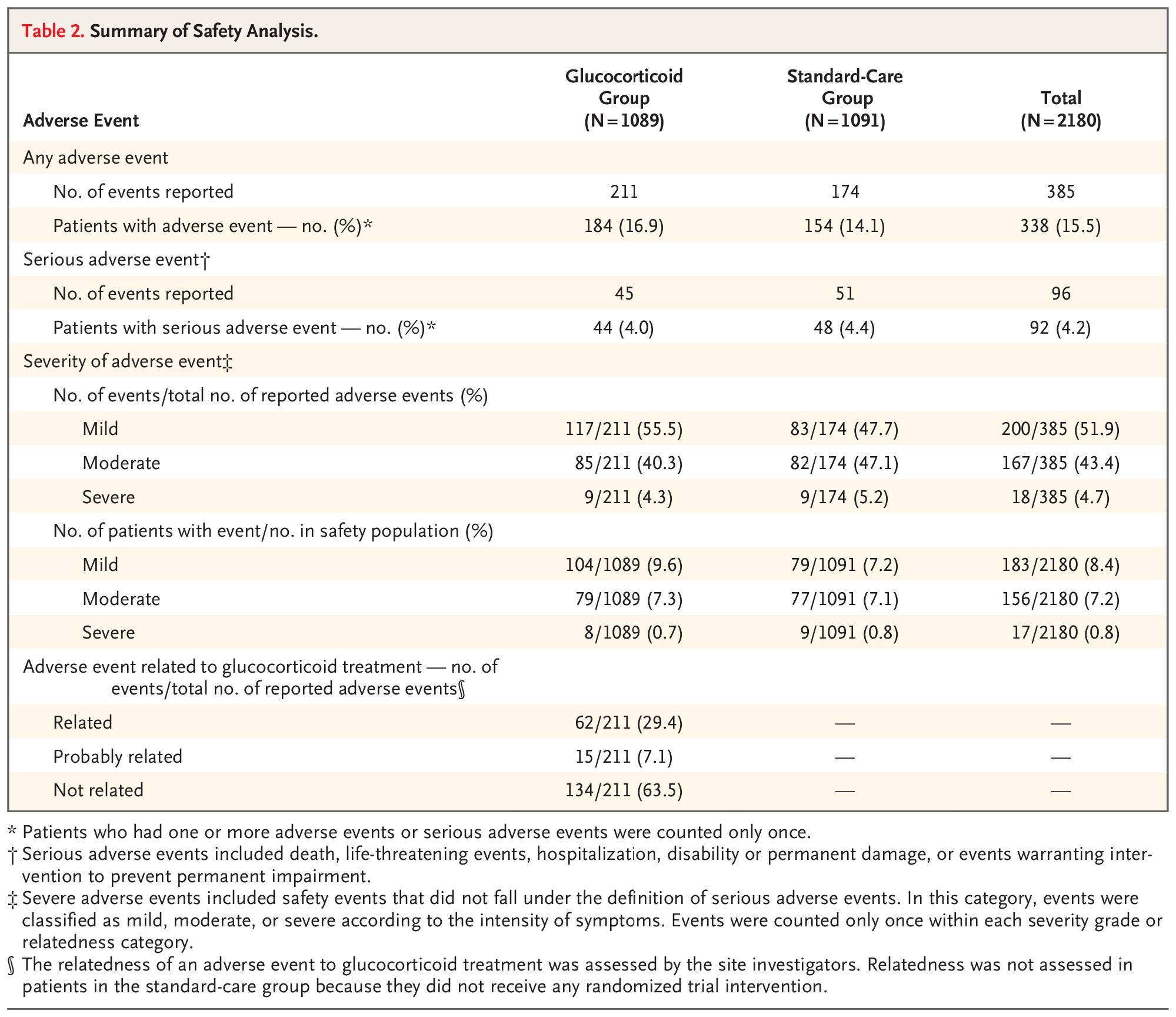
SafetyA total of 385 adverse events in 338 patients were reported by day 30 after baseline. Of these events, 18 (4.7%) were severe adverse events, 200 (51.9%) were mild events, and 167 (43.4%) were moderate events. Of the 211 adverse events that were reported in the glucocorticoid group, 62 (29.4%) were determined by the investigator to be related to glucocorticoid administration. The most common adverse events were pulmonary tuberculosis (34 events [16.1%]) and hyperglycemia (35 events[16.6%]) among the 211 events reported in the glucocorticoid group and pulmonary tuberculosis (35 events [20.1%]) and acute kidney injury (14 events [8.0%]) among the 174 events reported in the standard-care group (Table S17).A total of 96 serious adverse events were reported throughout the study. Such events that were deemed by the investigator to be possibly related to glucocorticoid administration were reported in 5 of 1089 participants (0.5%) in the glucocorticoid group (Table 2). Among the patients with serious adverse events, the most common event in the two groups was progression to severe CAP, which occurred in 9 of 45 patients (20.0%) in the glucocorticoid group and in 5 of 51 patients (9.8%) in the standard-care group (Table S18).Table 2Summary of Safety Analysis.
DiscussionIn this trial conducted under pragmatic conditions in Kenya, we found a lower risk of death from any cause among patients with CAP who were assigned to receive glucocorticoids along with standard care within 48 hours after hospital admission than among those assigned to receive standard care alone. Although the effect size (hazard ratio, 0.84) was smaller than that in previous reports from France (hazard ratio, 0.53),5 Egypt (hazard ratio, 0.22),23 and a meta-analysis of 12 trials (hazard ratio, 0.62),8 our results are consistent in identifying a beneficial effect of glucocorticoids in the management of CAP.Our trial differs from several other trials that have evaluated adjunctive glucocorticoids in that we selected a non-ICU setting to investigate mortality among patients with CAP. In previous trials of glucocorticoids in non-ICU settings conducted in Europe, investigators reported a reduced time to clinical stability12 and reduced length of stay and likelihood of ICU admission13 but did not have mortality as a primary outcome. Of the 18 studies informing the current guidelines of the Society of Critical Care Medicine that recommend the use of glucocorticoids in patients with severe CAP,3 only 3 were conducted in Africa with a total enrollment of 194 patients, all of whom had non-Black ancestry.23-25 As compared with the CAPE-COD trial conducted in French ICUs (a large trial that reported a beneficial effect of hydrocortisone in reducing mortality among patients with CAP),5 the patients in our trial were younger (median age, 53 years vs. 67 years), included more women (46.3% vs. 30.6%), had more patients with coexisting illnesses causing immunosuppression at enrollment (16.3% vs. 6.4%), and had higher overall mortality (24.3% vs. 9.1%).Overall mortality was higher in our trial than the estimate we had used in our pretrial power calculations. However, the trial was not powered to assess differences in outcomes according to disease severity or glucocorticoid type. Therefore, potential differential effects according to disease severity or glucocorticoid type in low-resource settings remain uncertain. In addition, the availability of cost-efficient and patient-friendly (according to pill burden) oral and intravenous formulations will need consideration if specific glucocorticoids are to be recommended for the treatment of CAP in our region.1Glucocorticoids have been reported to be safe when used in the management of severe CAP, with reversible hyperglycemia being the main side effect.7,8,26 As has been reported elsewhere,5,27,28 hyperglycemia was a common adverse event in our trial. However, the percentage of serious adverse events caused by hyperglycemia in the glucocorticoid group was low (8.9%) (Table S18). Even so, safety concerns remain and may need further investigation. We recommend accounting for the capacity to monitor blood glucose regularly if glucocorticoids are to be recommended for use in the management of CAP in sub-Saharan Africa.A major strength of our trial is the large sample size and large number of primary outcome events that occurred in patients who were recruited from multiple sites representing diverse populations across the country. The pragmatic nature of the trial, which was designed to reflect real-world conditions in low-resource settings, means that the results are likely to be more relevant to patients in sub-Saharan Africa than to those in high-resource settings. On the basis of our findings, adjunctive glucocorticoids could represent a low-cost intervention to reduce the high case fatality associated with CAP in sub-Saharan Africa.The main limitation of the trial is the enrollment of a heterogenous patient population because of limited diagnostic and treatment capabilities. This factor constrained our ability to compare the trial patients with those in previous studies or to identify which patients benefited from the intervention. It is possible that the results were affected by the inclusion of patients with conditions for which glucocorticoids have proven benefit (e.g., pneumocystis pneumonia and septic shock). However, the studies that showed benefit in these patients were conducted in markedly different settings and used different doses of glucocorticoids. Our broad eligibility criteria that did not take into consideration pneumonia severity and other baseline prognostic factors (e.g., functional status) may have biased our results toward the null, given that glucocorticoids appear to have a larger effect in patients with severe disease. We did not monitor cointerventions that were provided, and the open-label nature of the trial could also have influenced the result — factors that are mitigated by our use of a mortality end point.In addition, although patients underwent randomization within 48 hours after hospital admission, we did not record the number of hours until the initiation of glucocorticoids, which could have affected outcomes. Providing glucocorticoids free of charge may have limited our ability to assess their effect under conditions in which drug costs may influence treatment choices. Another limitation is that we primarily used oral formulations of glucocorticoids, which limits comparisons with studies that used intravenous formulations with better treatment adherence.In our trial involving patients who were hospitalized with CAP in a low-resource setting, the adjunctive use of glucocorticoids was associated with a lower risk of death from any cause than standard care.
NotesThis article was published on October 29, 2025, at NEJM.org.A data sharing statement provided by the authors is available with the full text of this article at NEJM.org.Supported by grants from the Wellcome Trust; from the U.K. Foreign, Commonwealth, and Development Office; and from the Bill and Melinda Gates Foundation. This research was funded in part by the Science for Africa Foundation to the Developing Excellence in Leadership, Training, and Science in Africa (DELTAS Africa) program (DEL-22-012) with support from the Wellcome Trust and the U.K. Foreign, Commonwealth, and Development Office and is part of the EDCPT2 program of the European Union. Support was also provided by a grant (NIHR 134544, to Ruth K. Lucinde and Anthony O. Etyang) from the National Institute of Health and Care Research.Disclosure forms provided by the authors are available with the full text of this article at NEJM.org.We thank the patients, hospital teams, and trial clinicians; and our colleagues at the Ministry of Health for supporting the Clinical Information Network and all clinical surveillance activities of the Kilifi Health and Demographic Surveillance.
Supplementary MaterialProtocol (nejmoa2507100_protocol.pdf)
References1.**Aston SJ, Rylance J. Community-acquired pneumonia in sub-Saharan Africa. Semin Respir Crit Care Med 2016;37:855-867.CrossrefPubMedWeb of ScienceGoogle Scholar2.Dagenais GR, Leong DP, Rangarajan S, et al. Variations in common diseases, hospital admissions, and deaths in middle-aged adults in 21 countries from five continents (PURE): a prospective cohort study. Lancet 2020;395:785-794.Crossref32007-0)PubMedWeb of ScienceGoogle Scholar%3A%20a%20prospective%20cohort%20study.&publication_year=2020&journal=Lancet&pages=785-794&doi=10.1016%2FS0140-6736(19)32007-0&pmid=31492501)3.Chaudhuri D, Nei AM, Rochwerg B, et al. 2024 Focused update: guidelines on use of corticosteroids in sepsis, acute respiratory distress syndrome, and community-acquired pneumonia. Crit Care Med 2024;52(5):e219-e233.CrossrefPubMedWeb of ScienceGoogle Scholar4.Meduri GU, Shih M-C, Bridges L, et al. Low-dose methylprednisolone treatment in critically ill patients with severe community-acquired pneumonia. Intensive Care Med 2022;48:1009-1023.CrossrefPubMedWeb of ScienceGoogle Scholar5.Dequin P-F, Meziani F, Quenot J-P, et al. Hydrocortisone in severe community-acquired pneumonia. N Engl J Med 2023;388:1931-1941.CrossrefPubMedWeb of ScienceGoogle ScholarRelated articles
◦ Oct 29, 2025
Glucocorticoids for Pneumonia in Africa — Old Therapy, New ContextA. Kwizera and M.W. DünserPHYSICIAN JOBSNovember 28, 2025New YorkNeurologyParkinson's and Movement Disorders Physicians - Northwell HealthBay Shore, New YorkSurgery, PlasticPlastic Surgery - Microsurgery FellowshipRaleigh, North CarolinaNephrologyInterventional Spine PhysiatristDraper, UtahPsychiatryChild and Adolescent Psychiatrist Outpatient Practice with a Sign on Bonus!Raleigh, North CarolinaPulmonary DiseaseSleep Specialist Neurologist, Wake County, NC - No IP CallWisconsinCardiologyNon-Invasive Cardiology Position near Green Bay, WI - 100k Sign-onMore Like ThisOriginal Article NEJM mai. 25, 2023Hydrocortisone in Severe Community-Acquired PneumoniaP.-F. Dequin and OthersCorrespondence NEJM ago. 17, 2023Hydrocortisone in Severe Community-Acquired PneumoniaOriginal Article NEJM out. 05, 2023Sarilumab for Relapse of Polymyalgia Rheumatica during Glucocorticoid TaperR.F. Spiera and OthersOriginal Article NEJM out. 12, 2023Adjunctive Dexamethasone for Tuberculous Meningitis in HIV-Positive AdultsJ. Donovan and OthersOriginal Article NEJM jun. 15, 2023Dexamethasone versus Surgery for Chronic Subdural Hematoma**I.P. Miah and OthersDownload PDF

**◦
◦
◦ Oct 29, 2025**
### Glucocorticoids for Pneumonia in Africa — Old Therapy, New Context
A. Kwizera and M.W. Dünser
-
-


ARTICLE CATEGORIES
RESOURCES**
ABOUT US**
SUBSCRIPTIONS**
STAY CONNECTED**
FOLLOW US**
JOURNALS**
Copyright © 2025 Massachusetts Medical Society . All rights reserved, including those for text and data mining, AI training, and similar technologies. Electronic ISSN 1533-4406. Print ISSN 0028-4793. The content of this site is intended for health care professionals.