The furosemide stress test predicts successful discontinuati
A lesão renal aguda (LRA) afeta mais de 20% dos pacientes em UTI, frequentemente necessitando de terapia de substituição renal contínua (CRRT). O teste de estresse com furosemida (FST) foi avaliado para prever a descontinuação bem-sucedida da CRRT em pacientes críticos. O estudo, realizado em uma UTI na China, incluiu 55 pacientes e encontrou que um débito urinário superior a 188 mL nas primeiras
Visão geral

Índice
🎯 Contexto Clínico
A lesão renal aguda (LRA) acomete mais de 20% dos pacientes em UTI, com necessidade frequente de terapia de substituição renal contínua (CRRT). O grande desafio é determinar quando descontinuar a CRRT de forma segura, evitando tanto a descontinuação precoce (com necessidade de reinício) quanto a prolongada (com riscos associados).
🔬 O Que Foi Estudado
Objetivo Principal: Avaliar se o Teste de Estresse com Furosemida (FST) pode prever a descontinuação bem-sucedida da CRRT em pacientes críticos com LRA.
Desenho do Estudo
Definições Importantes
Descontinuação bem-sucedida
Paciente vivo e livre de terapia de substituição renal por 7 dias após a descontinuação inicial
Protocolo do FST
- Dose: Furosemida 1,0 mg/kg IV em bolus
- Momento: Até 2 horas após parar a CRRT
- Avaliação: Débito urinário coletado por 2 horas
📊 Principais Resultados
Taxa de Sucesso
30 de 55 pacientes (54,5%) tiveram descontinuação bem-sucedida da CRRT.
Poder Preditivo do FST
Comparação dos Preditores:
| Variável | AUC | Sensibilidade | Especificidade |
|---|---|---|---|
| Débito 2h pós-FST | 0,913 | 80,0% | 92,0% |
| Débito 24h dia anterior | 0,739 | 82,8% | 68,0% |
| NGAL urinário | 0,725 | 62,5% | 71,4% |
Ponto de Corte Ideal
Performance deste ponto de corte:
Análise Multivariada
O débito urinário de 2h após FST foi o único preditor independente de sucesso (OR 8,870 para cada 100 mL de aumento, IC 95% 2,363-33,301, p=0,001)
Comparação Entre Grupos
No momento da descontinuação da CRRT:
| Parâmetro | Grupo Sucesso | Grupo Falha | p |
|---|---|---|---|
| Débito 2h pós-FST | 285 mL (199-382) | 70 mL (38-135) | <0,001 |
| Débito 24h anterior | 670 mL (357-887) | 200 mL (100-525) | 0,002 |
| NGAL urinário | 587 ng/mL | 1235 ng/mL | 0,020 |
Desfechos Clínicos
Sobrevida:
Dependência de TRS entre sobreviventes:
🔑 Conclusões Práticas
Aplicação Clínica
Quando realizar o FST:
Como interpretar:
Combinação com outros marcadores:
A combinação de débito >188 mL + NGAL <731 ng/mL aumenta ainda mais a acurácia:
📚 Contexto Científico
Por que o FST funciona?
O FST avalia a integridade tubular renal. A furosemida atua no ramo ascendente espesso da alça de Henle, reduzindo a reabsorção de sódio. Uma resposta adequada indica recuperação da função tubular renal.
Vantagens sobre outros métodos
- Padronizado: Dose definida (1 mg/kg), tempo definido (2h)
- Rápido: Resultado em 2 horas
- Não invasivo: Apenas uma dose IV de diurético
- Superior: AUC 0,913 vs 0,739 do débito urinário isolado
Comparação com Literatura
| Estudo | Método | AUC | Limitação |
|---|---|---|---|
| Xu et al. (atual) | FST (2h, 1 mg/kg) | 0,913 | Unicêntrico |
| Van der Voort | Infusão 24h furosemida | 0,84 | Protocolo não-FST |
| Outros modelos | Múltiplos indicadores | ~0,80 | Não interventivo |
⚠️ Limitações do Estudo
Limitações Metodológicas
- Estudo unicêntrico (n=55)
- Decisão de descontinuar CRRT não padronizada
- Critérios de reinício da CRRT não uniformes
- Médicos cientes dos resultados do FST
- Peso corporal na admissão usado para dose (pode ter mudado)
💊 Detalhes do Protocolo
Características da População
Fatores Associados à Falha
🎓 Pontos para Educação Médica
Racional Fisiopatológico:
Valor Clínico:
Volume 85, February 2025, 154929
Author links open overlay panelLiang Xu a, Lina Chen a, Xiangyang Jiang a, Weihang Hu a, Shijin Gong a, Junjun Fang b
https://doi.org/10.1016/j.jcrc.2024.154929Get rights and content
Abstract
Purpose
There is still no good method for predicting renal recovery and successful discontinuation of continuous renal replacement therapy (CRRT). This study assessed the ability of the furosemide stress test (FST) to predict successful discontinuation of CRRT.
Materials and methods
This prospective single-center study included patients with acute kidney injury who underwent an initial attempt at discontinuation of CRRT. Successful discontinuation was defined as alive without renal replacement therapy for 7 days after discontinuation. Furosemide 1.0 mg/kg was administered intravenously within 2 h after discontinuation of CRRT. Urine output was recorded for the next 2 h. Receiver-operating characteristic curve and logistic regression analyses were performed to determine the best discriminative variable and to identify independent risk factors.
Results
Discontinuation of CRRT was successful in 30 of 55 patients. The area under the curve for prediction of successful discontinuation was significantly greater for urine output in the 2 h following the FST (0.913) than for 24-h urine output on the previous day (0.739, P = 0.003) and urine neutrophil gelatinase-associated lipocalin (0.725, P = 0.020). A 2-h urine output of 188 mL had optimal sensitivity (0.800) and specificity (0.920). Multivariate analysis showed that 2-h urine output independently predicted successful discontinuation.
Conclusions
A urine output >188 mL in the first 2 h after FST predicted successful discontinuation of CRRT.
KeywordsAcute kidney injuryContinuous renal replacement therapyDiscontinuationFurosemide stress test
AbbreviationsAKIAcute kidney injuryAPACHEAcute Physiology and Chronic Health EvaluationAUCArea under the curveCIConfidence intervalCRRTContinuous renal replacement therapyFSTFurosemide stress testICUIntensive care unitIQRInterquartile rangeNGALNeutrophil gelatinase-associated lipocalinROCReceiver-operating characteristicRRTRenal replacement therapySOFASequential Organ Failure Assessment
1. Introduction
Acute kidney injury (AKI) is a common complication in critically ill patients [1]. More than 20 % of patients with AKI in the intensive care unit (ICU) receive renal replacement therapy (RRT), the majority of which is continuous renal replacement therapy (CRRT), within the first week of their ICU stay [2,3]. However, despite being an important measure for rescuing patients with severe AKI, CRRT does not come without problems. Associated difficulties include catheter-related bloodstream infection, thrombosis, bleeding, hemodynamic instability, and even interference with recovery of renal function [4]. Therefore, CRRT should be discontinued as soon as possible after renal function is restored. As with the timing of its initiation, recognizing when to stop CRRT may be challenging, and renal function is difficult to evaluate during CRRT [5,6]. Without standards for discontinuation, the failure rates have ranged widely from 34 % to 79 % [2,[[7]](https://www.sciencedirect.com/science/article/pii/S0883944124004167?casa_token=Y7coaPgiOooAAAAA%3AS6k79t6vVE5lefiE6ROtVMm-cWnCoKY8JGBgoKHuMKE-JHLapEax6boGwMRSMnnJjyxjID8AnmXg#bb0035), [[8]](https://www.sciencedirect.com/science/article/pii/S0883944124004167?casa_token=Y7coaPgiOooAAAAA%3AS6k79t6vVE5lefiE6ROtVMm-cWnCoKY8JGBgoKHuMKE-JHLapEax6boGwMRSMnnJjyxjID8AnmXg#bb0040), [[9]](https://www.sciencedirect.com/science/article/pii/S0883944124004167?casa_token=Y7coaPgiOooAAAAA%3AS6k79t6vVE5lefiE6ROtVMm-cWnCoKY8JGBgoKHuMKE-JHLapEax6boGwMRSMnnJjyxjID8AnmXg#bb0045)]. Observational studies have shown that the most significant predictor of successful discontinuation of CRRT is urine production, although this is affected by use of diuretics [2]. Other studies have demonstrated that the furosemide-induced diuretic response after cessation of CRRT is useful for prediction of renal recovery during the hospital stay [10,11]. Van der Voort et al. found that a high 4-h urine output in the 24 h following intravenous administration of furosemide 0.5 mg/kg/h for 24 h after termination of CRRT predicted renal recovery during the hospital stay [11,12]. However, the doses of diuretics administered in these studies were variable and the urine output thresholds were not consistent.
In recent years, the furosemide stress test (FST) has been confirmed to be useful for predicting development of stage 3 AKI [[[13]](https://www.sciencedirect.com/science/article/pii/S0883944124004167?casa_token=Y7coaPgiOooAAAAA%3AS6k79t6vVE5lefiE6ROtVMm-cWnCoKY8JGBgoKHuMKE-JHLapEax6boGwMRSMnnJjyxjID8AnmXg#bb0065), [[14]](https://www.sciencedirect.com/science/article/pii/S0883944124004167?casa_token=Y7coaPgiOooAAAAA%3AS6k79t6vVE5lefiE6ROtVMm-cWnCoKY8JGBgoKHuMKE-JHLapEax6boGwMRSMnnJjyxjID8AnmXg#bb0070), [[15]](https://www.sciencedirect.com/science/article/pii/S0883944124004167?casa_token=Y7coaPgiOooAAAAA%3AS6k79t6vVE5lefiE6ROtVMm-cWnCoKY8JGBgoKHuMKE-JHLapEax6boGwMRSMnnJjyxjID8AnmXg#bb0075), [[16]](https://www.sciencedirect.com/science/article/pii/S0883944124004167?casa_token=Y7coaPgiOooAAAAA%3AS6k79t6vVE5lefiE6ROtVMm-cWnCoKY8JGBgoKHuMKE-JHLapEax6boGwMRSMnnJjyxjID8AnmXg#bb0080), [[17]](https://www.sciencedirect.com/science/article/pii/S0883944124004167?casa_token=Y7coaPgiOooAAAAA%3AS6k79t6vVE5lefiE6ROtVMm-cWnCoKY8JGBgoKHuMKE-JHLapEax6boGwMRSMnnJjyxjID8AnmXg#bb0085)], and it would be useful to know whether the FST could also predict recovery of renal function after CRRT and successful discontinuation of this therapy.
The aim of this study was to determine if the FST can identify whether or not CRRT can be successfully discontinued. We hypothesized that the urine output in the 2 h following intravenous administration of furosemide 1.0 mg/kg could predict the likelihood of discontinuation of CRRT being successful.
2. Materials and methods
2.1. Patients
This prospective single-center study was performed between January 2020 and July 2023 in a mixed ICU at Zhejiang Hospital, a tertiary teaching institution in China. The study protocol was approved by the Zhejiang Hospital ethics committee (approval number 201935 K). Informed consent was obtained for each study participant or their legal representative.
All patients aged 18 years or older with AKI in whom a first attempt at discontinuation of CRRT was planned were screened for eligibility. AKI was defined and staged according to the 2012 KDIGO guidelines [18]. The following exclusion criteria were applied: preexisting end-stage renal disease (i.e., stage 5 chronic kidney disease); history of renal transplantation; pregnancy; abandonment of CRRT or other life support therapy; CRRT administered for <24 h; furosemide allergy; and active volume expansion after discontinuation of CRRT.
2.2. Study protocol
The decision to attempt discontinuation of CRRT was made by the treating team if the patient's systemic condition was stable, as indicated by improvement in volume overload, stabilization of the electrolyte and acid-base balance, hemodynamic stability, and increased urine output.
Furosemide 1.0 mg/kg was administered as an intravenous bolus within 2 h of stopping CRRT. Urine output was recorded for 2 h after administration of furosemide. The treating team decided whether to replace the urinary loss with isotonic intravenous fluid according to the patient's volume status. We considered CRRT to be discontinued when it had been stopped for ≥12 h [7]; otherwise, the case would be excluded until a CRRT cessation time of ≥12 h had been reached. The decision to re-initiate RRT was made by the treating team.
Demographic data and clinical information were collected at the time of admission to the ICU and included the Acute Physiology and Chronic Health Evaluation (APACHE) II and Sequential Organ Failure Assessment (SOFA) scores and the requirement for mechanical ventilation and vasopressors. Data on physiological and laboratory variables, including mean arterial pressure, urine output, fluid balance, urine neutrophil gelatinase-associated lipocalin (NGAL), serum creatinine, blood urea nitrogen, blood gas analysis, complete blood count, and C-reactive protein, were collected at the time of initiation and discontinuation of CRRT. Successful discontinuation was defined as alive and free from RRT for 7 days after initial discontinuation [2].
2.3. Statistical analysis
Continuous variables are expressed as the mean ± standard deviation if they were normally distributed or as the median (interquartile range [IQR]) if not. Categorical variables are shown as the number (percentage). Continuous variables were compared between groups using the t-test if normally distributed and the Mann–Whitney U test if not normally distributed. Categorical variables were compared between groups using the chi-squared test. The ability of various parameters to predict successful discontinuation of CRRT was assessed by receiver-operating characteristic (ROC) curve analysis. The Youden index was calculated to determine the optimal cut-off value that discriminated successful discontinuation of CRRT. The area under the curve (AUC) for each parameter of interest was compared using the Delong test. Multivariate logistic regression analysis was performed to identify independent predictors of successful discontinuation of CRRT using variables that had a P-value of <0.05 in univariate analysis. The statistical analyses were performed using SPSS software (version 29.0; IBM Corp., Armonk, NY, USA). All statistical tests were two-tailed, and a P-value <0.05 was considered statistically significant.
3. Results
3.1. Study population and outcome
Forty-seven of the 119 patients who received CRRT during the study period died during CRRT, two were transferred out of the ICU during CRRT, three withdrew consent to treatment, and four were identified as having preexisting end-stage renal disease. Among the remaining 63 patients in whom an initial attempt at discontinuation of CRRT was made, two received CRRT for <24 h, four withdrew consent to treatment, and two required active volume expansion (Fig. 1). Finally, the study included 55 patients, 65.6 % of whom were male. The mean age was 76.6 years. There were 30 cases in the successful discontinuation group and 25 in the unsuccessful discontinuation group. The median time to re-initiation of RRT in patients in whom the initial attempt at discontinuation was unsuccessful was 43.3 h (IQR 19.2–81.4). In all cases, the main reason for re-initiation of CRRT was oliguria. Other reasons were clinical perception of volume overload (n = 11), high serum creatinine (n = 4), and hyperkalemia (n = 2). The 28-day survival rate was higher in the successful group than in the unsuccessful group (83.3 % vs. 76.0 %); however, the between-group difference was not statistically significant (P = 0.498). The 90-day survival rate also tended to be higher in the successful group than in the unsuccessful group, but the difference was more pronounced (70.0 % vs. 44.0 %, P = 0.052). Among survivors, the 28-day RRT dependency rate was significantly lower in the successful group 0.0 % vs. 68.4 %, P < 0.001), as was the 90-day RRT dependence rate (8.7 % vs. 50.0 %, P = 0.014).
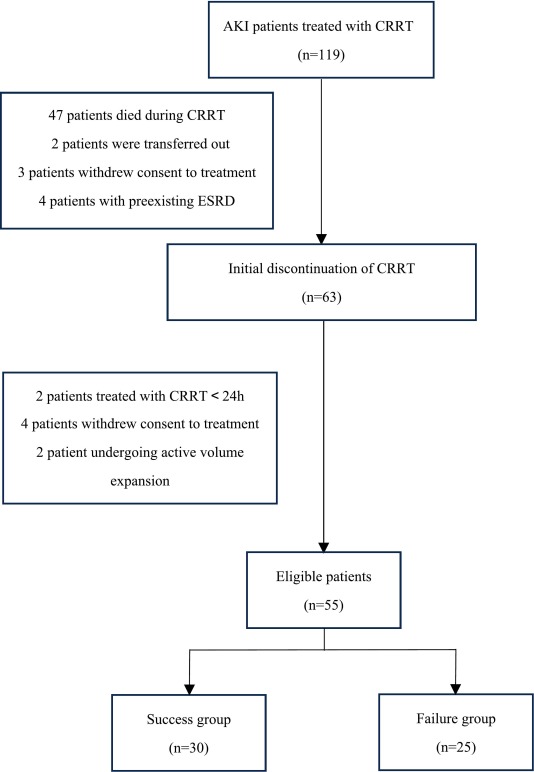
Fig. 1. The flow chart of patient enrollment. AKI, acute kidney injury; CRRT, continuous renal replacement therapy; ESRD, end-stage-renal-disease.
3.2. Patient characteristics at time of ICU admission and initiation of CRRT
There was no statistically significant between-group difference in baseline characteristics at the time of ICU admission (P > 0.05) (Table 1). At the time of initiation of CRRT, there were more patients with sepsis-associated AKI in the unsuccessful group than in the successful group (76.0 % vs. 46.7 %, P = 0.027). The unsuccessful group tended to have a higher C-reactive protein level at the time of initiation of CRRT, but the difference did not reach statistical significance (P > 0.05). Furthermore, there was no statistically significant between-group difference in AKI stage, SOFA score, serum creatinine, or fluid accumulation during the interval between admission to the ICU and initiation of CRRT (P > 0.05) (Table 2).
Table 1. Baseline characteristics at ICU admission.
| Variables | Overall (n = 55) | Success group (n = 30) | Failure group (n = 25) | p |
|---|---|---|---|---|
| Age, years | 76.6 ± 14.2 | 73.8 ± 15.2 | 79.9 ± 12.5 | 0.115 |
| Male, % | 36 (65.6) | 18 (60.0) | 18 (72.0) | 0.351 |
| Body weight, kg | 60 (55–70) | 60 (51–68) | 65 (60–72) | 0.081 |
| Comorbidities (n, %) | ||||
| Chronic kidney disease* | 14 (25.5) | 7 (23.3) | 7 (28.0) | 0.692 |
| Hypertension | 36 (65.5) | 18 (60.0) | 18 (72.0) | 0.351 |
| Diabetes | 26 (47.3) | 13 (43.3) | 13 (52.0) | 0.522 |
| Chronic heart failure | 13 (23.6) | 9 (30.0) | 4 (16.0) | 0.224 |
| Malignancy | 8 (14.5) | 3 (10.0) | 5 (20.0) | 0.446 |
| Indication for ICU admission | ||||
| Respiratory failure | 22 (40.0) | 12 (40.0) | 10 (40.0) | 0.438 |
| Heart failure | 8 (14.5) | 6 (20.0) | 2 (8.0) | |
| Sepsis | 9 (16.4) | 4 (13.3) | 5 (20.0) | |
| Post-operative | 5 (9.1) | 4 (13.3) | 1 (4.0) | |
| Trauma | 7 (12.7) | 3 (10.0) | 4 (16.0) | |
| Others | 4 (7.3) | 1 (3.3) | 3 (12.0) | |
| Apache II score | 25.2 ± 7.4 | 25.0 ± 7.9 | 25.4 ± 6.8 | 0.831 |
| SOFA score | 9.0 (7.0–11.0) | 9.5 (8.0–12.0) | 8.0 (6.0–10.5) | 0.164 |
| Vasopressors support (n, %) | 27 (49.1) | 18 (60.0) | 9 (36.0) | 0.076 |
| Mechanical ventilation (n, %) | 37 (67.2) | 21 (70.0) | 16 (64.0) | 0.637 |
APACHE II, Acute Physiology and Chronic Health Evaluation II; SOFA, Sequential Organ Failure Assessment. * 15 mL/min ≤ eGFR <60 mL/min.
Table 2. Characteristics at CRRT initiation.
| Variables | Overall(n = 55) | Success group(n = 30) | Failure group(n = 25) | p |
|---|---|---|---|---|
| AKI stage (n,%) | ||||
| Stage 1 | 4 (7.3) | 3 (10.0) | 1 (4.0) | 0.684 |
| Stage 2 | 8 (14.5) | 4 (13.3) | 4 (16.0) | |
| Stage 3 | 43 (78.2) | 23 (76.7) | 20 (80.0) | |
| Contributing factors to AKI | ||||
| Sepsis | 33 (60.0) | 14 (46.7) | 19 (76.0) | 0.027 |
| Low cardiac output | 16 (29.1) | 8 (26.7) | 8 (32.0) | 0.665 |
| Hypovolemia | 8 (14.5) | 5 (16.7) | 3 (12.0) | 0.462 |
| Major surgery | 4 (7.3) | 4 (13.3) | 0 (0) | 0.117 |
| Other | 4 (7.3) | 4 (13.3) | 0 (0) | 0.117 |
| Apache II score | 26.2 ± 7.6 | 26.3 ± 8.5 | 26.0 ± 6.7 | 0.921 |
| SOFA score | 10.0 (8.0–12.0) | 10.0 (9.0–13.0) | 10.0 (7.0–11.0) | 0.054 |
| Vasopressors support (n, %) | 34 (61.8) | 22 (73.3) | 12 (48.0) | 0.054 |
| mechanical ventilation (n, %) | 41 (74.5) | 25 (83.3) | 16 (64.0) | 0.101 |
| MAP, mmHg | 84 ± 15 | 85 ± 16 | 83 ± 14 | 0.669 |
| pH | 7.32 ± 0.09 | 7.33 ± 0.10 | 7.32 ± 0.09 | 0.788 |
| Blood lactate (mmol/L) | 1.90 (1.19–4.85) | 2.10 (1.35–5.62) | 1.57 (1.11–2.95) | 0.204 |
| PaO2/FiO2 | 247 ± 100 | 230 ± 107 | 268 ± 89 | 0.172 |
| Serum creatinine (μmol/L) | 264.7 (187.9–395.0) | 241.0 (173.3–383.7) | 304.0 (204.2–460.3) | 0.187 |
| Blood urea nitrogen (mmol/L) | 27.62 ± 15.14 | 27.38 ± 16.78 | 27.91 ± 13.24 | 0.899 |
| Albumin (g/L) | 30.65 ± 4.96 | 31.15 ± 5.85 | 30.14 ± 3.97 | 0.516 |
| Leukocyte count (*109/L) | 8.59 (6.39–15.28) | 8.69 (6.47–15.99) | 8.15 (6.25–14.09) | 0.892 |
| Hemoglobin (g/L) | 86 (71–108) | 87 (70–116) | 86 (73–107) | 0.780 |
| Platelet count (*109/L) | 121 ± 63 | 128 ± 66 | 113 ± 59 | 0.374 |
| C-reactive protein (mg/dL) | 80.77 (43.17–127.63) | 64.56 (23.09–112.56) | 94.76 (51.27–186.69) | 0.053 |
| Fluid accumulation between ICU admission and CRRT initiation (mL) | 1490 (220–2363) | 1500 (210–2450) | 1481 (223–2357) | 0.815 |
CRRT, continuous renal replacement therapy; AKI, acute kidney injury; APACHE II, Acute Physiology and Chronic Health Evaluation II; SOFA, Sequential Organ Failure Assessment; MAP, Mean arterial pressure.
3.3. Clinical characteristics at time of discontinuation of CRRT
At the time of discontinuation of CRRT, the median 24-h urine output on the previous day had been significantly higher in the successful group than in the unsuccessful group (670 mL [IQR 357–887] vs 200 ml [IQR 100–525], P = 0.002). The median urine NGAL level was 587.20 ng/mL (IQR 159.45–999.45) in the successful group and 1235.25 ng/mL (IQR 527.05, 3000.00) in the unsuccessful group (P = 0.020). Median urine output in the 2 h after the FST was significantly greater in the successful group (285 mL [IQR 199–382] vs 70 mL [IQR 38–135], P < 0.001). There was no significant difference in the APACHE II or SOFA score, blood lactic acid level, blood creatinine, duration of CRRT, or the cumulative fluid balance between the two groups at the time of discontinuation of CRRT (P > 0.05) (Table 3).
Table 3. Characteristics at CRRT discontinuation.
| Variables | Overall(n = 55) | Success group(n = 30) | Failure group(n = 25) | P |
|---|---|---|---|---|
| Apache II score | 19.5 ± 5.5 | 18.6 ± 5.7 | 20.6 ± 5.1 | 0.165 |
| SOFA score | 8.0 (6.0–10.0) | 8.0 (6.7–10.3) | 8.0 (6.0–10.5) | 0.651 |
| Vasopressors support (n, %) | 20 (36.4) | 12 (40.0) | 8 (32.0) | 0.539 |
| Mechanical ventilation (n, %) | 33 (60.0) | 20 (66.7) | 13 (52.0) | 0.269 |
| MAP, mmHg | 85 ± 13 | 83 ± 15 | 87 ± 10 | 0.322 |
| pH | 7.43 ± 0.06 | 7.45 ± 0.06 | 7.42 ± 0.07 | 0.105 |
| Blood lactate (mmol/L) | 1.30 (1.00–2.00) | 1.50 (0.89–2.33) | 1.22 (1.05–1.55) | 0.207 |
| PaO2/FiO2 | 281 (228–360) | 270 ()221–393 | 286 (240–350) | 0.716 |
| Serum creatinine (μmol/L) | 106.5 (59.0–159.0) | 85.0 (54.5–137.6) | 122.5 (63.0–179.5) | 0.233 |
| Urine NGAL (ng/mL) | 785.45 (387.55–2963.70) | 587.20 (159.45–999.45) | 1235.25 (527.05–3000.00) | 0.020 |
| Blood urea nitrogen (mmol/L) | 7.38 (5.30–11.59) | 7.30 (5.09–10.77) | 7.38 (5.68–12.65) | 0.521 |
| Albumin (g/L) | 32.30 ± 4.31 | 32.78 ± 4.39 | 31.78 ± 4.25 | 0.429 |
| Leukocyte count (*109/L) | 8.20 (5.93–11.87) | 9.58 (5.87–12.57) | 7.85 (6.00–9.92) | 0.452 |
| Hemoglobin (g/L) | 85 ± 20 | 86 ± 22 | 85 ± 18 | 0.860 |
| Platelet count (*109/L) | 85 (52–139) | 79 (54–121) | 97 (50–157) | 0.554 |
| C-reactive protein (mg/dL) | 99.7 ± 66.3 | 97.1 ± 65.6 | 102.9 ± 68.5 | 0.747 |
| CRRT duration (hours) | 84.7 (65.7–166.8) | 86.1 (48.8–176.6) | 81.2 (66.0–156.0) | 0.695 |
| Cumulative fluid balance from CRRT initiation to CRRT discontinuation (mL) | −1634 ± 3991 | −1013 ± 4295 | −2354 ± 3555 | 0.222 |
| 24-h urine output on the previous day (mL) | 400 (180–750) | 670 (357–887) | 200 (100–525) | 0.002 |
| 2-h urine output after FST(mL) | 175 (70–300) | 285 (199–382) | 70 (38–135) | <0.001 |
CRRT, continuous renal replacement therapy; APACHE II, Acute Physiology and Chronic Health Evaluation II; SOFA, Sequential Organ Failure Assessment; MAP, Mean arterial pressure; NGAL, neutrophil gelatinase-associated lipocalin; FST, furosemide stress test.
3.4. ROC curve and multivariate analyses
ROC curve analysis showed that the AUC for prediction of successful discontinuation of CRRT was 0.913 (95 % confidence interval [CI] 0.840–0.986) for urine output in the 2 h after the FST (Fig. 2A). A 2-h urine output of 188 mL had optimal sensitivity (0.800 [95 % CI 0.648–0.952]) and specificity (0.920 [95 % CI 0.806–1.000]). The respective AUCs for 24-h urine output and urine NGAL for prediction of successful discontinuation of CRRT were 0.739 (95 % CI 0.605–0.872) and 0.725 (95 % CI 0.586–0.864) (Fig. 2B, C). The AUC for urine output in the 2 h after the FST was significantly greater than the AUC for 24-h urine output on the previous day (P = 0.003) and that for urine NGAL (P = 0.020). Although 24-h urine output on the previous day had slightly higher sensitivity, among the three variables, the specificity and positive and negative predictive values were highest for urine output in the 2 h after the FST (Table 4). We then evaluated the predictive performance of a combination of the cutoff values for 2-h urine output after FST and urine NGAL. Compared with a 2-h urine output of >188 mL after FST alone, the combination of a 2-h urine output of >188 mL after FST or a urine NGAL level < 731 ng/mL had better sensitivity (0.862 [95 % CI 0.729–0.996]) and specificity (0.923 [95 % CI 0.813–1.000]) as well as a better positive predictive value (0.926 [95 % CI 0.820–1.000]) and negative predictive value (0.857 [95 % CI 0.719–0.995]).
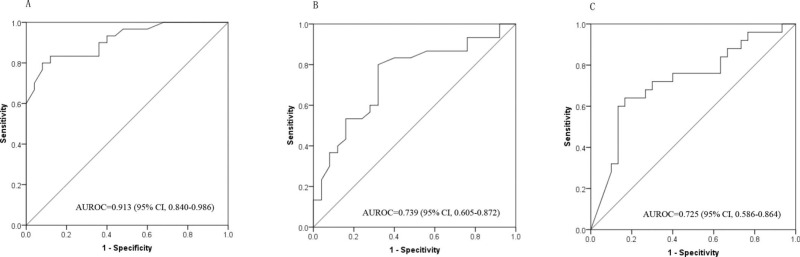
Fig. 2. ROC curves of 2-h urine output after FST (A), 24-h urine output on the previous day (B) and urine NGAL before discontinuation (C) for the prediction of successful discontinuation of CRRT.
Table 4. Diagnostic test parameters for 2-h urine output after FST, 24-h urine output on the previous day and urine NGAL.
| Empty Cell | 2-h urine output after FST | 24-h urine output on the previous day | urine NGAL |
|---|---|---|---|
| AUC (95 %CI) | 0.913 (0.840–0.986) | 0.739 (0.605–0.872) | 0.725 (0.586–0.864) |
| Sensitivity (95 %CI) | 0.800 (0.648–0.952) | 0.828 (0.681–0.974) | 0.625 (0.416–0.834) |
| Specificity (95 %CI) | 0.920 (0.806–1.000) | 0.680 (0.483–0.877) | 0.714 (0.504–0.925) |
| Positive predictive value (95 %CI) | 0.923 (0.813–1.000) | 0.750 (0.591–0.909) | 0.714 (0.504–0.925) |
| Negative predictive value (95 %CI) | 0.793 (0.636–0.950) | 0.772 (0.583–0.963) | 0.625 (0.416–0.834) |
| Cut-off | 188 mL | 325 mL | 731 ng/mL |
FST, furosemide stress test; NGAL, neutrophil gelatinase-associated lipocalin; AUC, area under the curve.
Multivariate analysis that included AKI with sepsis, urine output in the 2 h following the FST, 24-h urine output on the day before discontinuation, and urine NGAL before discontinuation identified the 2-h urine output after the FST to be the only independent predictor of successful discontinuation of CRRT (odds ratio 8.870 for each 100-mL increase in urine output, 95 % CI 2.363–33.301, P = 0.001; Table 5). The AUC for the final model that included the above four variables was 0.940 (95 % CI 0.882–0.998; Fig. 3), which was slightly greater than that for the 2-h urine output after the FST (P = 0.272). There were no FST-related adverse events.
Table 5. Multivariate logistic regression analysis for successful discontinuation of CRRT.
| Empty Cell | β coefficient | Odds Ratio | 95 % CI | P |
|---|---|---|---|---|
| AKI with sepsis | −1.649 | 0.192 | 0.028–1.321 | 0.094 |
| 2-h urine output after FST, 100 mL | 2.183 | 8.870 | 2.363–33.301 | 0.001 |
| 24-h urine output on the previous day, 100 mL | 0.002 | 1.002 | 0.806–1.247 | 0.982 |
| Urine NGAL, ng/mL | −0.001 | 0.999 | 0.999–1.000 | 0.186 |
CRRT, continuous renal replacement therapy; FST, furosemide stress test; NGAL, neutrophil gelatinase-associated lipocalin.
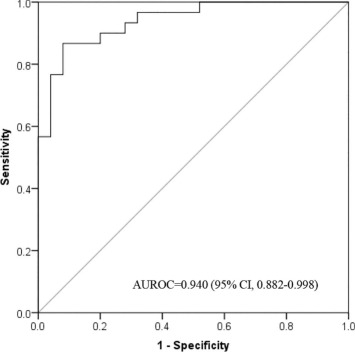
Fig. 3. ROC curve for the final prediction model.
4. Discussion
In this prospective study, we found that the 2-h urine output after the FST was an independent predictor of discontinuation of CRRT. At the optimal cut-off value of 188 mL, the AUC for the 2-h urine output after the FST that predicted successful discontinuation was 0.913, which was better than the AUCs for 24-h urine output on the previous day and the urine NGAL level before discontinuation. A 2-h urine output >188 mL after the FST was better able to predict successful discontinuation of CRRT when combined with a urine NGAL level of <731 ng/mL than when used alone. Although AKI with sepsis, 24-h urine output, and urine NGAL were not independent predictors of successful discontinuation of CRRT, combining the above metrics may improve the discriminatory ability of the model further.
In recent years, there has been a gradual increase in the number of studies on the timing of discontinuation of CRRT [19,20]. Although a few studies have reported that creatinine clearance [21], urinary creatinine concentration [22], serum cystatin C, and NGAL [23] may predict successful discontinuation of CRRT, other studies have shown that urine output is still the most important factor [2,10,24]. Raurich et al. [25] reported that the area under the ROC curve for prediction of a successful CRRT weaning test was higher for the 6-h urine output after discontinuation of CRRT. Heise et al. [26] found that 8-h urinary output after cessation of CRRT was one of three parameters that independently influenced the recovery of kidney function during CRRT-free intervals. However, the various studies have shown considerable variation in urine output in their successful CRRT discontinuation groups [2,10,24]. Furthermore, it was difficult to determine a threshold for urine output in retrospective studies because of the use of diuretics. Uchino et al. [2] concluded that the ability of urine output to predict successful discontinuation of CRRT was negatively affected by diuretic use.
Although use of diuretics reduces the comparability of urine output between patients, these agents are valuable in terms of being able to discontinue CRRT. Although assessment of recovery of renal function in patients on CRRT is often difficult, furosemide is a good tool for examination of the integrity of the renal tubules and reserve. Provided that the renal tubules are intact, loop diuretics, especially furosemide, reduce sodium reabsorption in the thick ascending limb of the loop of Henle, resulting in increased urinary sodium and water excretion [27]. Therefore, recovery of the renal response to furosemide in patients on CRRT implies recovery of function of the renal tubules. It has been confirmed that the furosemide-induced diuretic response in patients without immediate recovery of renal function within 24 h after cessation of CRRT is of additional value in terms of prediction of eventual renal recovery during the hospital stay [11]. The retrospective study by Raurich et al. [25], in which patients received diuretics at various dosages and via different routes, still found that the area under the ROC curve for 6-h urine output was better able to predict weaning from CRRT in patients who received furosemide than in those who did not (0.94 vs. 0.85).
A standardized weight-based furosemide dose for the FST was first described in 2013 [13]. Subsequent studies have confirmed that the FST can predict whether patients with AKI will progress to stage 3, which may also assist in determining the timing of initiation of CRRT [[[14]](https://www.sciencedirect.com/science/article/pii/S0883944124004167?casa_token=Y7coaPgiOooAAAAA%3AS6k79t6vVE5lefiE6ROtVMm-cWnCoKY8JGBgoKHuMKE-JHLapEax6boGwMRSMnnJjyxjID8AnmXg#bb0070), [[15]](https://www.sciencedirect.com/science/article/pii/S0883944124004167?casa_token=Y7coaPgiOooAAAAA%3AS6k79t6vVE5lefiE6ROtVMm-cWnCoKY8JGBgoKHuMKE-JHLapEax6boGwMRSMnnJjyxjID8AnmXg#bb0075), [[16]](https://www.sciencedirect.com/science/article/pii/S0883944124004167?casa_token=Y7coaPgiOooAAAAA%3AS6k79t6vVE5lefiE6ROtVMm-cWnCoKY8JGBgoKHuMKE-JHLapEax6boGwMRSMnnJjyxjID8AnmXg#bb0080), [[17]](https://www.sciencedirect.com/science/article/pii/S0883944124004167?casa_token=Y7coaPgiOooAAAAA%3AS6k79t6vVE5lefiE6ROtVMm-cWnCoKY8JGBgoKHuMKE-JHLapEax6boGwMRSMnnJjyxjID8AnmXg#bb0085)]. Some investigators have recently suggested that apart from predicting which patients will develop AKI based on the renal response to furosemide, this concept could also potentially be used to predict recovery of renal function after CRRT in critically ill patients with AKI [12,25]. Studies by Van der Voort et al. compared the effect of continuous infusion of furosemide on the recovery of renal function with that of placebo and found that in patients who received furosemide 0.5 mg/kg/h intravenously for 24 h after termination of CRRT, a high 4-h urine output 24 h later predicted renal recovery during the hospital stay with an area under the ROC of 0.84 [11,12]. However, although those authors referred to use of the FST, collecting 4-h urine output after 24 h of continuous infusion of furosemide is clearly different from the currently accepted FST method, and the sample size used for the ROC analysis was only 25. Our study is the first to report on use of the standardized FST to predict weaning from CRRT and confirms its role in predicting successful discontinuation. Furthermore, the results could be predicted 24 h earlier in our study than in the previous study by Van der Voort et al. [12]. Noteworthy in our study is that the FST 2-h urine output threshold for prediction of successful discontinuation was 188 mL, which was in good agreement with the threshold of 200 mL previously reported for prediction of progression of AKI [17].
Novel biomarkers, such as NGAL used to detect early AKI, have also been reported to be associated with renal recovery and predict successful liberation from RRT [28,29]. In a study by Xiaohan et al. [30], serum NGAL was even comparable to urine output for predicting successful CRRT discontinuation in nonseptic AKI patients. However, in our study, the AUC for prediction of successful discontinuation was significantly greater for the 2-h urine output after the FST than for urine NGAL. Since the combination of the two variables had stronger ability in predicting, a joint application of them may be a wise choice. Recent studies of the outcomes of discontinuation of CRRT have developed predictive models by combining a variety of non-interventional observational indicators, with the majority having an AUC of around 0.80 [7,24,31]. In our study, the AUC for the ability of the FST to predict the outcome was greater than that in most other studies, and 24-h urine output and urine NGAL could improve the value of the model further. One potential clinical application of the findings of this study is that when the purpose of CRRT has been achieved, performing the FST to assess recovery of renal function during each CRRT-free interval for filter replacement, rather than after the decision from clinicians to stop CRRT, may help to allow CRRT to be withdrawn as early as possible. In the future, if the results of the FST can be integrated into a larger CRRT discontinuation outcome prediction model, the predictive power of the model may be improved further.
It should be considered that the duration of AKI and likelihood of successful discontinuation of CRRT are also related to the patient's primary disease and pre-existing renal function. In our study, there was no significant between-group difference in the proportion of patients with CKD, apart from more patients with sepsis in the unsuccessful group. Counterintuitively, patients in the successful group were more likely to be on vasopressors and to have a higher SOFA score at the time of initiation of CRRT. However, the between-group differences in the proportion of patients on vasopressor support and in the SOFA score disappeared at the time of discontinuation of CRRT. In this study, a proportion of patients were on vasopressors at the time of initiation of CRRT even without sepsis, mostly as a result of volume overload or heart failure; however, the overall condition of these patients, including their renal function, might improve more rapidly with the negative fluid balance on CRRT than in their counterparts with severe sepsis.
This study has several limitations. First, it had a single-center design and included a limited number of cases. Second, the decision to discontinue CRRT was made by the treating team without setting consistent criteria for doing so. For example, a patient's volume status might affect their urine output. Third, there were no uniform criteria for re-initiation of CRRT. Although the differences in treatment decisions in the same ICU were relatively small, we cannot exclude the possibility that physicians were inconsistent in determining if and when to restart CRRT and that certain patients in whom this treatment could have been permanently discontinued were restarted on CRRT within 7 days. Fourth, the attending physicians were aware of the results of the FST, which could have been a source of bias. However, because the median delay to re-initiation of CRRT was 43.3 h (IQR 19.2–81.4), subsequent urine output and other conditions were more likely to be the primary factors influencing the physicians' decision to restart RRT rather than urine output after the FST, which was performed within 2 h of stopping CRRT. Finally, we used body weight on admission to determine the furosemide dosage, and the actual weight might have changed after treatment in the ICU, thereby affecting the dosage administered.
In conclusion, a urine output of more than 188 mL in the first 2 h after the FST predicts successful discontinuation of CRRT. This research provides a practical bedside tool for clinical decision-making. Combining the FST with other clinical indicators to build a predictive model for successful discontinuation of CRRT may help us to answer the question of when to discontinue CRRT. The value of the FST in discontinuation of CRRT requires confirmation in larger studies.
Funding
This study was supported by Zhejiang Medical and Health Science and Technology Project (Grant No. 2020KY392).
Declaration of competing interest
The authors have no conflicts of interest to declare.
Acknowledgments
The authors thank all the medical staff of ICU for assistance in data collection and Liwen Bianji (Edanz) (www.liwenbianji.cn) for editing the English text of a draft of this manuscript.
Recommended articles
E.A. Hoste, S.M. Bagshaw, R. Bellomo, et al.
Epidemiology of acute kidney injury in critically ill patients: the multinational AKI-EPI study
Intensive Care Med, 41 (2015), pp. 1411-1423
CrossrefView in ScopusGoogle Scholar
S. Uchino, R. Bellomo, H. Morimatsu, et al.
Discontinuation of continuous renal replacement therapy: a post hoc analysis of a prospective multicenter observational study
Crit Care Med, 37 (9) (2009), pp. 2576-2582
S.M.L. Helmut Schiffl, R.F.J.C.K. J
Long-term outcomes of survivors of ICU acute kidney injury requiring renal replacement therapy: a 10-year prospective cohort study
5 (4) (2012), pp. 297-302
S.M. Bagshaw, S. Uchino, J.A. Kellum, et al.
Association between renal replacement therapy in critically ill patients with severe acute kidney injury and mortality
J Crit Care, 28 (2013), pp. 1011-1018
View PDFView articleView in ScopusGoogle Scholar
Marlies Ostermanna, Michael Joannidisb, Antonello Pani, et al.
Patient selection and timing of continuous renal replacement therapy
Blood Purif, 42 (2016), pp. 224-237
Klouche Kada, Gibney R.T. Noel, Lui G. Forni
Can this patient be safely weaned from RRT?
Intensive Care Med, 44 (2018), pp. 639-642
Liu Chang, Peng Zhiyong, Dong Yue, et al.
Predicting successful continuous renal replacement therapy liberation in critically ill patients with acute kidney injury
J Crit Care, 66 (2021), pp. 6-13
Stads Susanne, Kant K. Merijn, Margriet F.C. de Jong, et al.
Predictors of short-term successful discontinuation of continuous renal replacement therapy: results from a prospective multicentre study [J]
BMC Nephrol, 20 (2019), p. 129
Erin K. Stenson, Issa Alhamoud, Rashid Alobaidi, et al.
Factors associated with successful liberation from continuous renal replacement therapy in children and young adults: analysis of the worldwide exploration of renal replacement outcomes collaborative in kidney disease registry
Intensive Care Med, 50 (2024), pp. 861-872
CrossrefView in ScopusGoogle Scholar
J. Jeon, D.H. Kim, S.I. Baeg, et al.
Association between diuretics and successful discontinuation of continuous renal replacement therapy in critically ill patients with acute kidney injury
Crit Care, 22 (1) (2018), p. 255
Van d V P H J, E.C. Boerma, M. Koopmans, et al.
Furosemide does not improve renal recovery after hemofiltration for acute renal failure in critically ill patients: a double blind randomized controlled trial
Crit Care Med, 37 (2) (2009), pp. 533-538
V.D.V.P. Hj, E. Boerma, P. Pickkers
The furosemide stress test to predict renal function after continuous renal replacement therapy
Crit Care, 18 (3) (2014), p. 429
L.S. Chawla, D.L. Davison, E. Brasha-Mitchell, et al.
Development and standardization of a furosemide stress test to predict the severity of acute kidney injury
Crit Care, 17 (5) (2013), p. R207
J.L. Koyner, D.L. Davison, E. Brasha-Mitchell, et al.
Furosemide stress test and biomarkers for the prediction of AKI severity
J Am Soc Nephrol, 26 (8) (2015), pp. 2023-2031
R. Matsuura, Y. Komaru, Y. Miyamoto, et al.
Response to different furosemide doses predicts AKI progression in ICU patients with elevated plasma NGAL levels
Ann Intensive Care, 8 (1) (2018), p. 8
N. Lumlertgul, S. Peerapornratana, T. Trakarnvanich, et al.
Early versus standard initiation of renal replacement therapy in furosemide stress test non-responsive acute kidney injury patients (the FST trial)
Crit Care, 22 (1) (2018), p. 101
O.G. Rewa, S.M. Bagshaw, X. Wang, et al.
The furosemide stress test for prediction of worsening acute kidney injury in critically ill patients: a multicenter, prospective, observational study
J Crit Care, 52 (2019), pp. 109-114
View PDFView articleView in ScopusGoogle Scholar
KDIGO Working Group
Clinical practice guideline for acute kidney injury
Kidney Int Suppl, 2 (2012), pp. 124-138
Schiffl Helmut, Susanne M. Lang
Current approach to successful liberation from renal replacement therapy in critically ill patients with severe acute kidney injury: the quest for biomarkers continues
Mol Diagn Ther (2020), p. 25
K. Klouche, V. Brunot, R. Larcher, et al.
Weaning from kidney replacement therapy in the critically ill patient with acute kidney injury
J Clin Med, 13 (2024), p. 579
CrossrefView in ScopusGoogle Scholar
S. Frohlich, A. Donnelly, O. Solymos, et al.
Use of 2-hour creatinine clearance to guide cessation of continuous renal replacement therapy
J Crit Care, 27 (6) (2012), pp. 744.e1-744.e5
View PDFView articleGoogle Scholar
N. Viallet, V. Brunot, N. Kuster, et al.
Daily urinary creatinine predicts the weaning of renal replacement therapy in ICU acute kidney injury patients
Ann Intensive Care, 6 (1) (2016), p. 71
Chang Seong Kim, Eun Hui Bae, Seong Kwon Ma, et al.
A Prospective Observational Study on the Predictive Value of Serum Cystatin C for Successful Weaning from Continuous Renal Replacement Therapy
vol. 43, Kidney Blood Press Res (2018), pp. 872-881
CrossrefView in ScopusGoogle Scholar
S. Katayama, S. Uchino, M. Uji, et al.
Factors predicting successful discontinuation of continuous renal replacement therapy[J]
Anaesth Intensive Care, 44 (4) (2016), pp. 453-457
CrossrefView in ScopusGoogle Scholar
M. Raurich Joan, A. Llompart-Pou Juan, A. Novo Mariana, et al.
Successful weaning from continuous renal replacement therapy. Associated risk factors
J Crit Care, 45 (2018), pp. 144-148
D. Heise, D. Gries, O. Moerer, et al.
Predicting restoration of kidney function during CRRT-free intervals
J Cardiothorac Surg, 7 (1) (2012), p. 6
S.W. Oh, S.Y. Han
Loop diuretics in clinical practice
Electrolyte Blood Press, 13 (1) (2015), pp. 17-21
N. Srisawat, R. Murugan, J.A. Kellum
Repair or progression after AKI: a role for biomarkers?
Nephron Clin Pract, 127 (2014), pp. 185-1899
View at publisherCrossrefView in ScopusGoogle Scholar
Josefine Thomsen, Ulrik Sprogøe, Palle Toft
Urine neutrophil gelatinase-associated lipocalin and urine output as predictors of the successful discontinuation of continuous renal replacement therapy in critically ill patients with acute kidney injury
BMC Nephrol, 21 (1) (2020), p. 375
Chen Xiaohan, Chen Zhiwen, Wei Tiantian, et al.
The effect of serum neutrophil gelatinase-associated Lipocalin on the discontinuation of continuous renal replacement therapy in critically ill patients with acute kidney injury
Blood Purif, 48 (2019), pp. 10-17
Baeg Song In, Jeon Junseok, Yoo Heejin, et al.
A scoring model with simple clinical parameters to predict successful discontinuation of continuous renal replacement therapy
Blood Purif, 50 (2021), pp. 779-789
Cited by (3)
2025, BMC Nephrology
2025, Critical Care
2025, Critical Care
© 2024 Elsevier Inc. All rights are reserved, including those for text and data mining, AI training, and similar technologies.
All content on this site: Copyright © 2025 Elsevier B.V., its licensors, and contributors. All rights are reserved, including those for text and data mining, AI training, and similar technologies. For all open access content, the relevant licensing terms apply.
Cookie settings